| © Copyright Robert Cole
2015 - No copying or
distributing - YAMASHIRO YAMASHIRO HASEBE School |


|
|
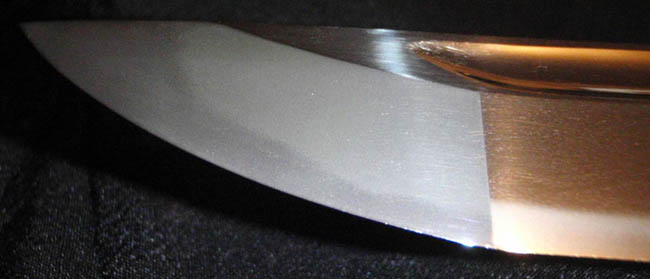
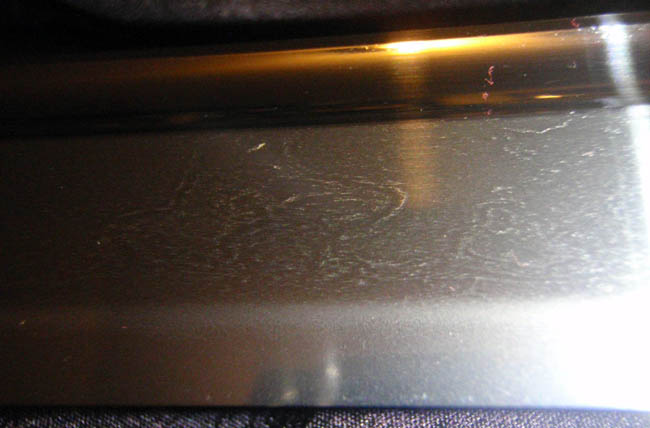
It is said SHINTOGO associated with HASE-DERA Temple in YAMATO and started the HASEBE. Thin and wide TORIIZORI. O-ITAME has MASAME toward the MUNE, - a HASEBE mark. CHIKEI. HAKO-like paired O-GUNOME and HYOTAN "Gourd" GUNOME compete within an undulating GUNOME O-MIDARE line. INAZUMA hides in HAKIKAKE SUNAGASHI while KINSUJI drifts like loose strands of silk. Complex forms may appear delicate. TOBI straddles grain lines in the JI where YUBASHIRI is found. Strong NIE within NIOI. ASHI falls. MIDARE BOSHI coordinates deep KAERI. __________________ SHINTOGO KUNIMITSU SHO-AN 1199 ___________|____ "The Ten Students" HASEBE NAGAMITSU GEN-O 1319 HASEBE KUNISHIGE(1) KEM-MU 1334 See AWATAGUCHI KUNITOMO |_______________ _____________ ________|_______ ___|____ ___|____ - Three Brothers - HASEBE KUNISHIGE 2) KUNIHIRA KUNINOBU - EN-BUN 1356 - | BUN-WA 1352 ________________ ____________|____________________ ________|_______ ___|____ ____|____ ___|____ HASEBE KUNISHIGE(3) NOBUYUKI SHIGENOBU(1) KA-KEI MUNENOBU To SETTSU O-EI 1394 EI-WA 1375 ____|____ 1387 SHI-TOKU __________ _______ SHIGENOBU(2) 1384 SHIGEMITSU NOBUIYE O-EI 1394 O-EI 1394 MEI-O 1492 |
| HESHI-KIRI
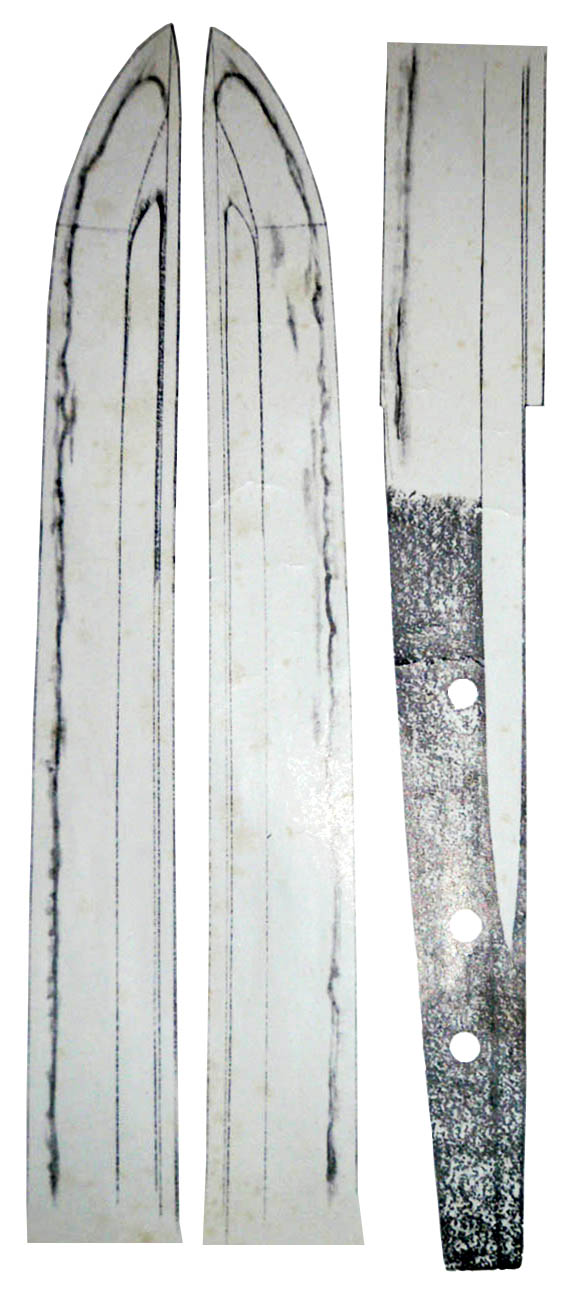
HASEBE KUNISHIGE KOKUHO National Treasure 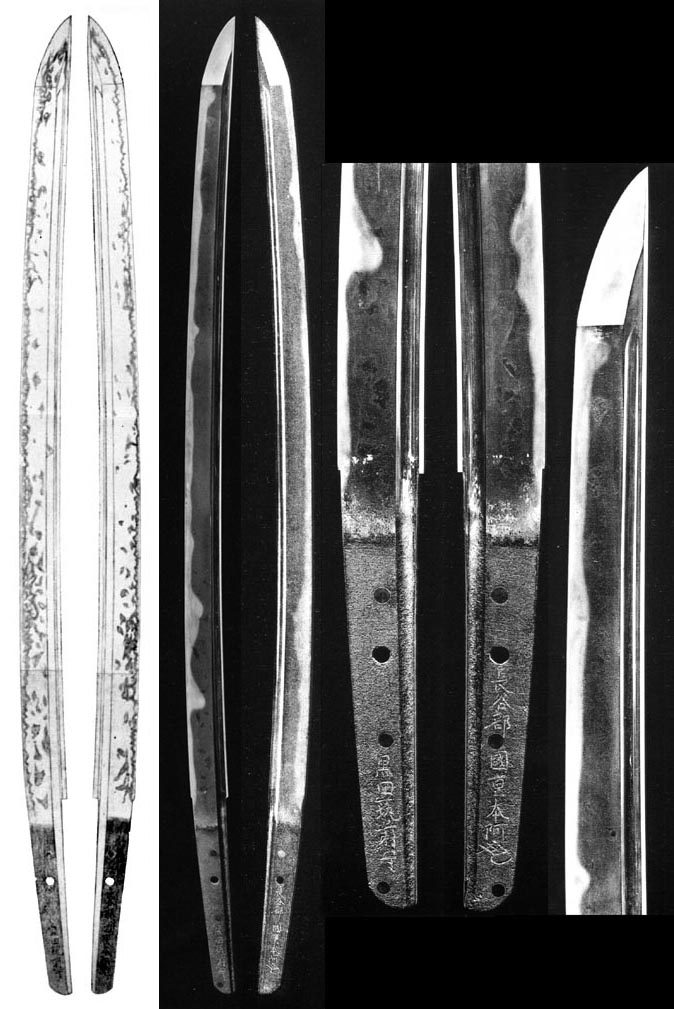 Heshi-Kiri Kunishige NAGASA: 2 SHAKU 1.4 SUN SORI: 3 BU MOTO-HABA: 1 SUN SAKI-HABA: 8.2 BU NAKAGO: 5.3 SUN ODA NOBUNAGA's favorite sword. A Family Treasure of the KURODA, it was owned by KURODA JOSUI (formally YOSHITAKA) who married into the KODERA and defended HIMEJI against their long landlords, the AKAMATSU. He joined the call of NOBUNAGA seeing his former Lord, KODERA NORIMOTO boat another course and lose HIMEJI to HIDEYOSHI's drive down the coast. In 1600 he supported TOKUGAWA in KYUSHU - and then retired. A particularly strong
NAMBOKUCHO SUGATA: Wide, slightly curved, broad
O-KISSAKI and BO-HI. The HI lays on the SHINOGI,
resolving to its back in a slope, its point just
in line with the YOKOTE. YUBASHIRI apparitions
burst from eruptions in the lower to ride a
maelstrom through the JI. The YAKIBA appears as a
fire-ravaged structure that simply expurgated into
the air. The upper is tame. Crowded ASHI drop and
run, opening jumbled GUNOME heads. Presently mounted as a
KATANA. KOSHIRAE: MOMOYAMA Period UCHIGATANA mounts of red Same and AO colored (bluish green) and gold Saya by Nobuiye. |

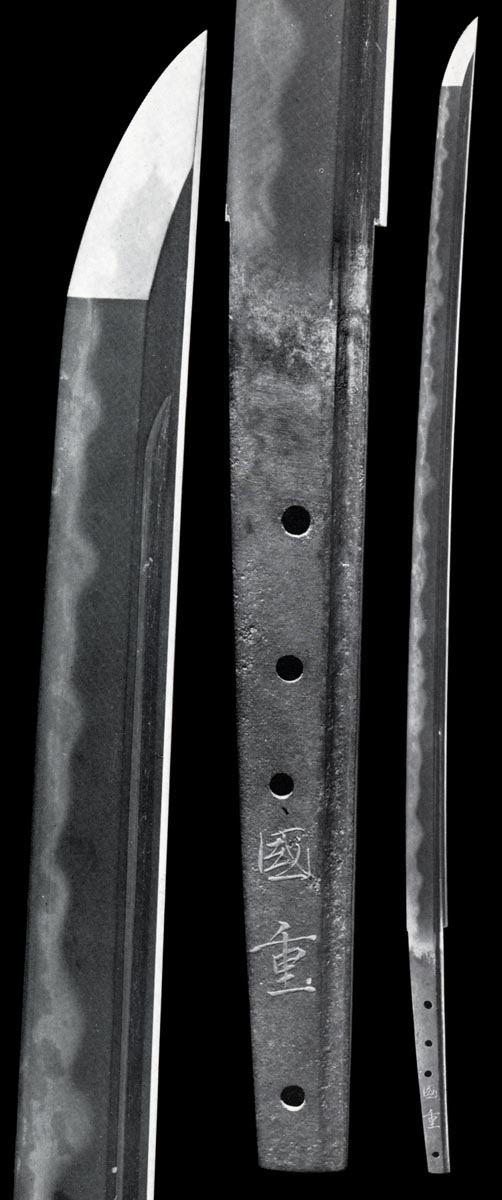 Hasebe Kunishige - Juyo Bunkazai Nagasa:78.3cm Namboku style Shinogi-Tsukuri, Ihori-Mune, shallow Niku with wide Ji to O-Kissaki. Bohi terminates low. Notare holds Gunome-Midare with Kinsuji, Sunagashi and Toki-Yaki in the typical Hasebe Hitatsura style. Some Yo. Undulating Midare Saagari Togari Boshi with medium Kaeri. O-Suriage Kiri-Jiri Nakago has four Mekugi-ana. Gold inlay: Kunishige |
Hasebe Kuninobu - Juyo Bunkazai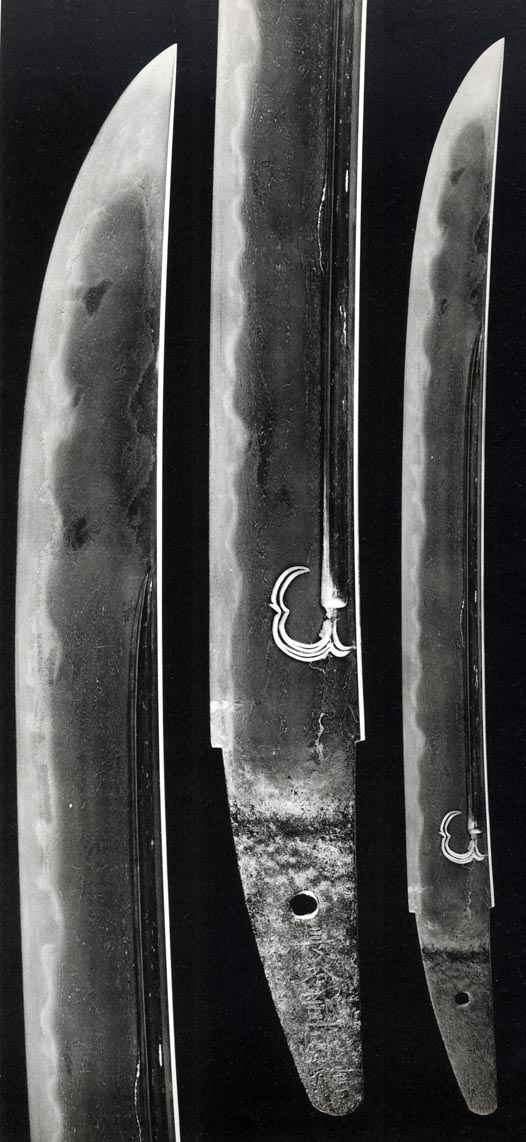 |
||
| Hasebe Kuninobu Nagasa: 1 Shaku 3 Sun 4 Bu (40.6cm) Sori: 2 Bu (0.76cm) Moto-haba: 1 Sun 2 Bu 7 Rin (3.85cm) Moto-kasane: 2 Bu 4 Rin (0.73cm) Nakago: 3 Sun 3 Bu (9.7cm)
|
Juyo
Bunkazai Kunishige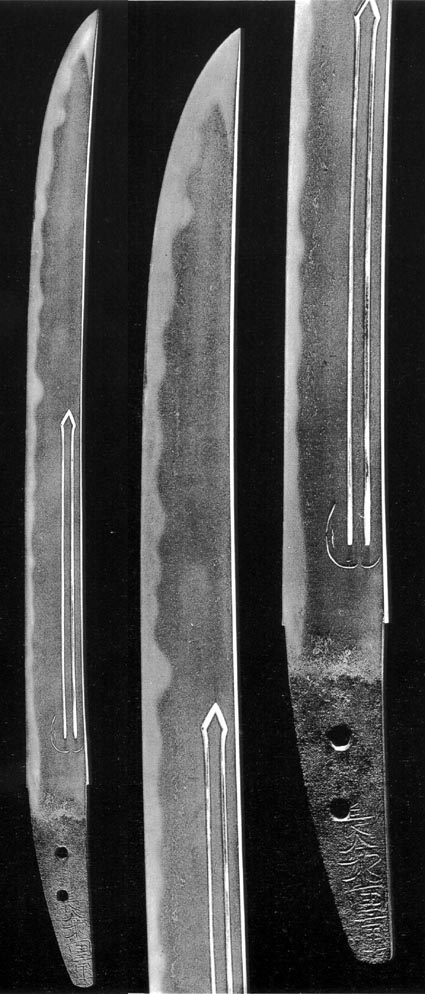 Juyo Bunkazai Kunishige Dambira NAGASA: 37.3cm SORI: .7cm HIRA-TSUKURI, MITSU-MUNE. Wide, thin blade with little SORI. Elongated, WAKIZASHI-length, NAMBOKUCHO OTANTO. A long SUKEN rises along the MUNE from the Lotus. Running ITAME-HADA has thick JI-NIE and CHIKEI. HAMON of KO-NOTARE with GUNOME-MIDARE BA in NIOI and KO-NIE. There are ASHI, YO and KINSUJI. MIDARE-KOMI BOSHI shows a TSUKI-AGE that is KO-MARU at the head and a long falling KAERI. SOSHU influenced NAKAGO pulls quickly to small KURIJIRI. With two MEKUGI-ANA and his clearly placed MEI:
|
Go
Tohaku Kuninobu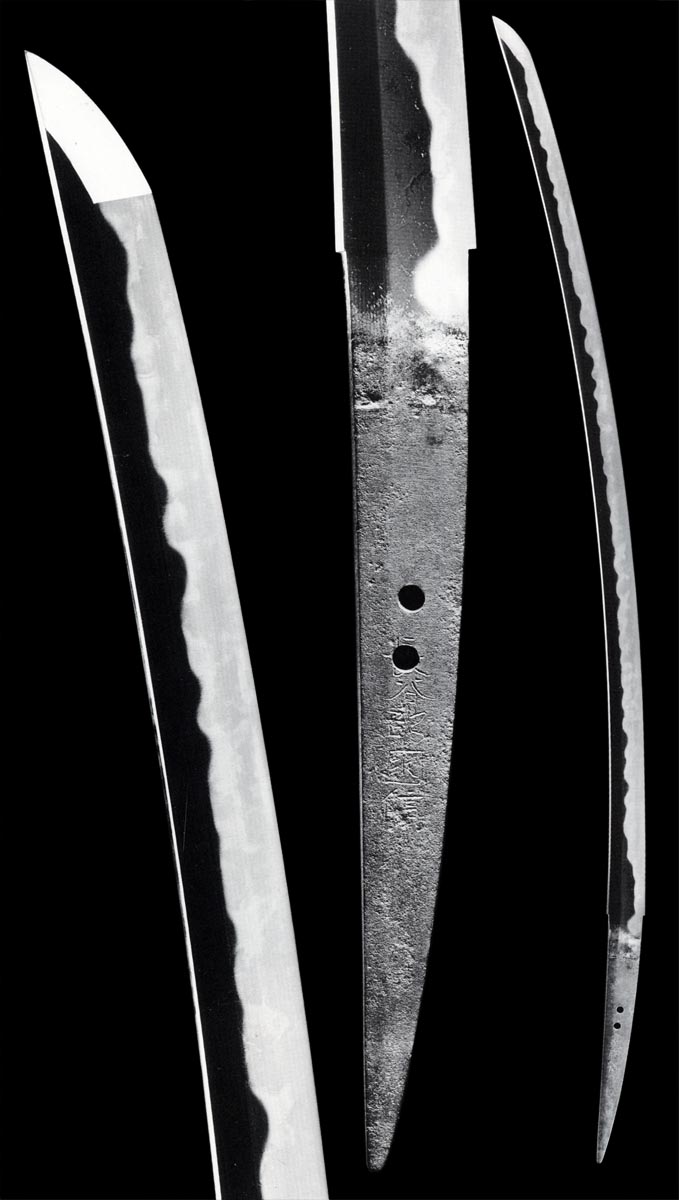
|
KUNIHIRA EN-BUN (f: KUNISHIGE 1): ITAME with MASAME toward the MUNE has JI-NIE. NIE-DEKI O-MIDARE, GUNOME-MIDARE mix with an undulating line in his HITATSURA BA. SUNAGASHI and KINSUJI run and drift. Simple HORIMONO forms. KUNINOBU BUN-WA (f: KUNISHIGE 1): Second son. Some reference states he was KUNISHIGE(2). Or that he later changed his name to KUNISHIGE. Others dispute it. The NAKAGO and MEI are not similar. KUNINOBU made FUNAZOKO-GATA "Boat-bottom" NAKAGO that pulls to a small KURIJIRI. His KUNI has the normal interior radical and strokes are thin. The MEI has a smooth and gently ordered perpendicularity, among several points. Generally, KUNINOBU blades are thinner. Made TACHI, small TANTO and O-TANTO. ITAME HADA becomes MASAME near the MUNE, the expected HASEBE mark. The HITATSURA style of the 1st riddles the upper with TOBI. ASHI and YO court while KINSUJI and SUNAGASHI swim together. FUNAZOKO-GATA "Boat-bottom" seems cropped by a small, round KURIJIRI. Five character MEI: HASEBE KUNINOBU. SHIGENOBU KA-KEI (t: KUNINOBU): Made wide KATAKIRI BA TANTO with MITSU-MUNE. ITAME HADA with MASAME along at the MUNE (HASEBE style). SUNAGASHI runs through an uneven NIE GUNOME-MIDARE line. MIDARE BOSHI. HORIMONO: BONJI and grass-style KURIKARA in a frame. 2nd SHIGENOBU in O-EI. NOBUYUKI EI-WA (f: KUNINOBU): Worked to O-EI 1394. ITAME HADA. GUNOME-MIDARE in an uneven NOTARE roll - SOSHU style. HITATSURA BA. MUNENOBU SHI-TOKU (f: KUNINOBU): GOJO JU. HASEBE traveler. A TANTO maker, KUNINOBUs' second son finds his way to YAMATO, KAWACHI, SAGAMI and OWARI. He made wide, thin blades in running ITAME HADA with MASAME at the MUNE, HASEBE style. An uneven NOTARE line displays O-GUNOME MIDARE HA with MUNE-YAKI defining a KUNINOBU style HITATSURA BA of angular forms. ASHI and YO crowd while brushed SUNAGASHI runs. HAKIKAKE sweeps a MIDARE BOSHI that plies an O-MARU course. KUNISHIGE(3) O-EI (f: KUNINOBU): ROKUROZAEMON. KEN-TOKU 1370. Late NAMBOKUCHO smith who transferred and worked the O-EI at SHI-TENNO-JI Temple in SETTSU. He made HIRA-TSUKURI KO-WAKIZASHI. Signed with the TAMA radical inside his KUNI frame, but the main definer is O-EI style. His predecessors' HITATSURA falls here to NIE-KUZURE GUNOME- MIDARE with ASHI that has an altogether more smooth feeling. MEI has thick strokes but will not tend to fill the area as does KUNISHIGE(2). |
|
|