| © Copyright
Robert Cole 2015 - No copying or distributing
YAMASHIRO YAMASHIRO AWATAGUCHI KUNITOMO School "The Six Sons" of KUNIIYE 1st son |
SCHEMATIC OF TRAVELS


SCHEMATIC OF TRAVELS |
|
_____________
TORIN KUNIIYE GEN-RYAKU 1184
____|_____________
TORIN KUNITOMO KEN-KYU 1190 - SHO-GEN GOBAN and Twenty-four GOBAN
    |____________________ __________ _________
____|___              ___|____   ___|____  ___|____
NORIKUNI              KUNISUKE   TOMOSUYE  KUNIZANE KEN-PO 1213
    | SHO-KYU 1219      - TEI-O 1222 -     ___|___
    |                                      KUNINAO BUN-EI 1264
    |______________________________________ ____________________
____|____                              ____|___                 |
KUNIYOSHI HO-JI 1247                   KUNINOBU KO-CHO 1261     |
    |___________________ __________        |                    |
____|_____  ____________|____  ____|____   |                    |
YOSHIMITSU  RAI TARO KUNIYUKI  YOSHIMASA   |                    |
       - SHO-GEN 1259 -        KAN-KI 1229 |                    |
          __________ __________ ___________|__________          |
     ____|____   ___|____   ___|____   ____|____   ___|____     |
     SANETOSHI   SANETAKA   SANEKIYO   MASATSUGU   KUNISADA     |
     HO-JI 1247    - KO-CHO 1261 -      KO-AN 1278  BUN-EI 1264 |
                ______________________                          |
                TOSHIRO-SAKON KUNINOBU SHO-WA 1312              |
                ________________________________ _______________|
_______________|____                        ____|____
AWATAGUCHI KUNIMITSU(1) KEN-CHO 1249        MASAMITSU BUN-O 1260
  _____________|____                  __________|____
  SHINTOGO KUNIMITSU(2) SHO-AN 1299   TOSA YOSHIMITSU SHO-AN 1299
    ___________|____                    SENJUIN and TEGAI
    HASEBE NAGAMITSU GEN-O 1319
KUNITOMO KEN-KYU (f: KUNIIYE): SHO-GEN GOBAN KAJI - sixth month and the Twenty-four GOBAN KAJI with BIZEN KANEMICHI - 1st month. TORINZAEMON. 1st son. Being the eldest, he is the likely candidate for attributing AWATAGUCHI swords of the older SUGATA styles. His will be KO-KISSAKI TACHI SUGATA of a noted grace. KO-ITAME HADA with JI-NIE. HOSO- SUGU width of KO-MIDARE BA with ASHI that shows KINSUJI. AWATAGUCHI style NIE JI-BA dapple the line. MEI: KUNITOMO KUNITOMO TSUKURU TOMOSUYE TEI-O (t: KUNITOMO): Work to KAN-GEN 1243. KUNISUKE TEI-O 1222 |
NORIKUNI SHO-KYU (f: KUNITOMO): TOMANOSUKE. OKI GOBAN KAJI - 1st
          and 2nd month. Made swords in the transition period
          from early to mid KAMAKURA and both styles may be seen.
          Early pieces show KO-KISSAKI KOSHIZORI. Mid-KAMAKURA
          SUGATA has the unmistakable emphasis to the upper with
          an IKUBI-like, broad KISSAKI. NASHI-JI style KO-MOKUME
          is evenly veiled in JI-NIE. Standing, AWATAGUCHI style
          NIE-UTSURI. SUGU CHOJI-MIDARE with ASHI or  KO-MIDARE
          CHOJI BA in KO-NIE. Robust KINSUJI walks in SUNAGASHI.
          BOSHI is HAKIKAKE brushed KO-MARU.
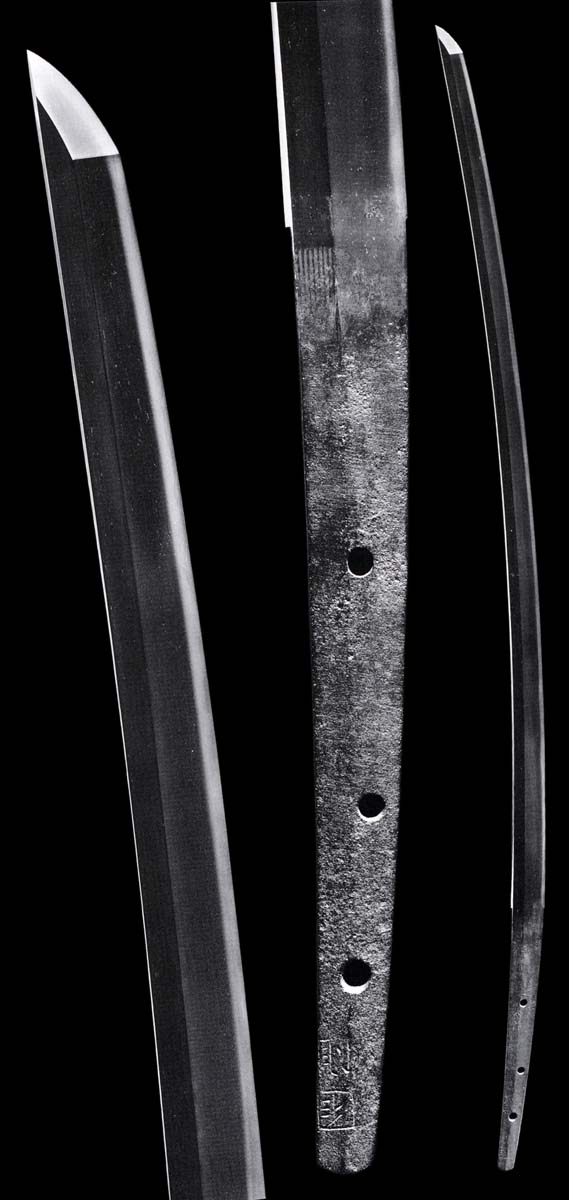
Kokuho Norikuni
|
Kokuho Norikuni 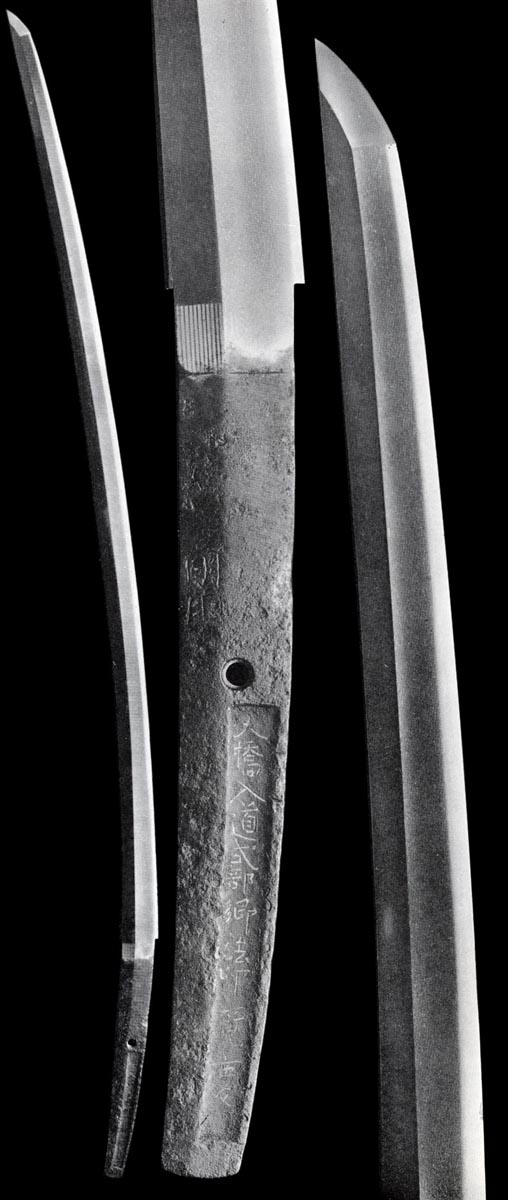 Kokuho Norikuni Nagasa: 81.1cm Moto-Haba: 3.2cm Shinogi-Tsukuri, Ihori-Mune Soku-Niku, Ha-side raised, deeply cuved Tachi. Running Itame Hada with profuse Ji-Nie and strong Chikei. Ko-Nie Fukashi Chu-Suguha that is Ko-Midare. Sugu Ko-Maru Boshi with small Kaeri. Ubu Furisode style Kurijiri with one Mekugi-ana. Norikuni Frame: Ohashi Nyudo Shikibu Gyoho Shi Ryokei |
KUNIYOSHI HO-JI: The eldest son of AWATAGUCHI NORIKUNI. KUNIYOSHI BUNKAZAI
TANTO
|
 |
Kuniyoshi
- Kokuho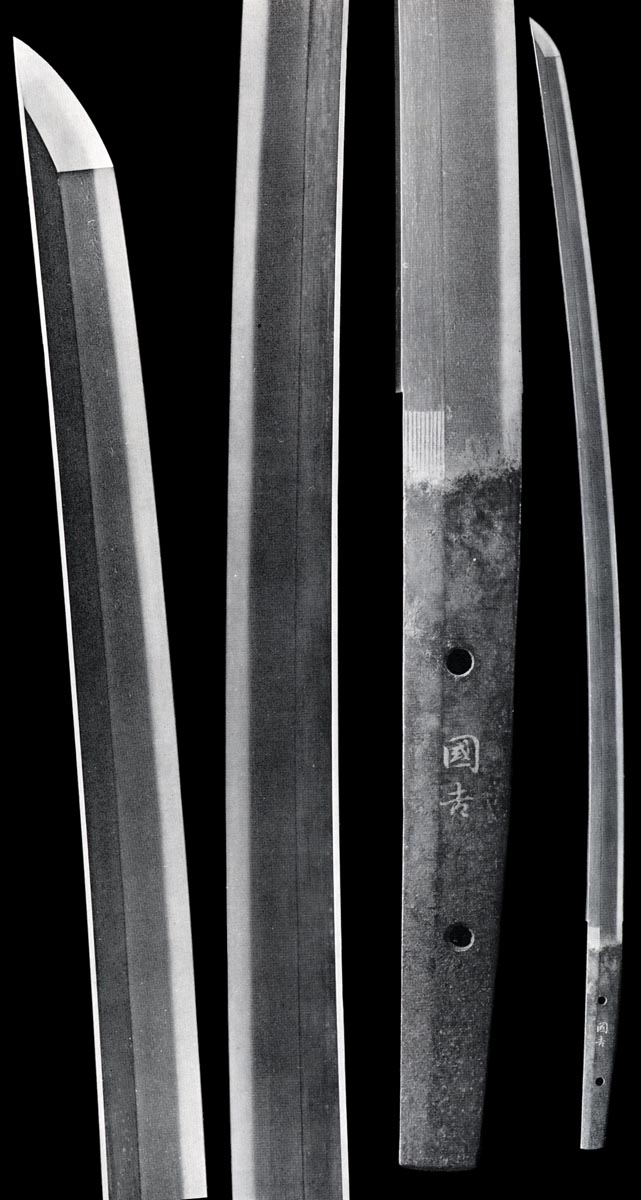 Kuniyoshi - Kokuho Nagasa: 69.7cm Moto-Haba: 2.8cm Shinogi-Tsukuri, Ihori-Mune, elongated Chu-Kissaki. Knit Ko-Itame of Nashiji Hada profuse Ji-Nie and strong Chikei. Masame in the Shinogi-Ji. Ko-Nie and Nioi Fukashi Chu-Suguha is Ko-Midare. Sugu Ko-Maru Boshi with short Kaeri. O-Suriage Nakago has two Mekugi-ana and Kinzogan-Mei gold attribution. Kinzogan: Kuniyoshi |
Kuniyoshi
Koshigatana - Kokuho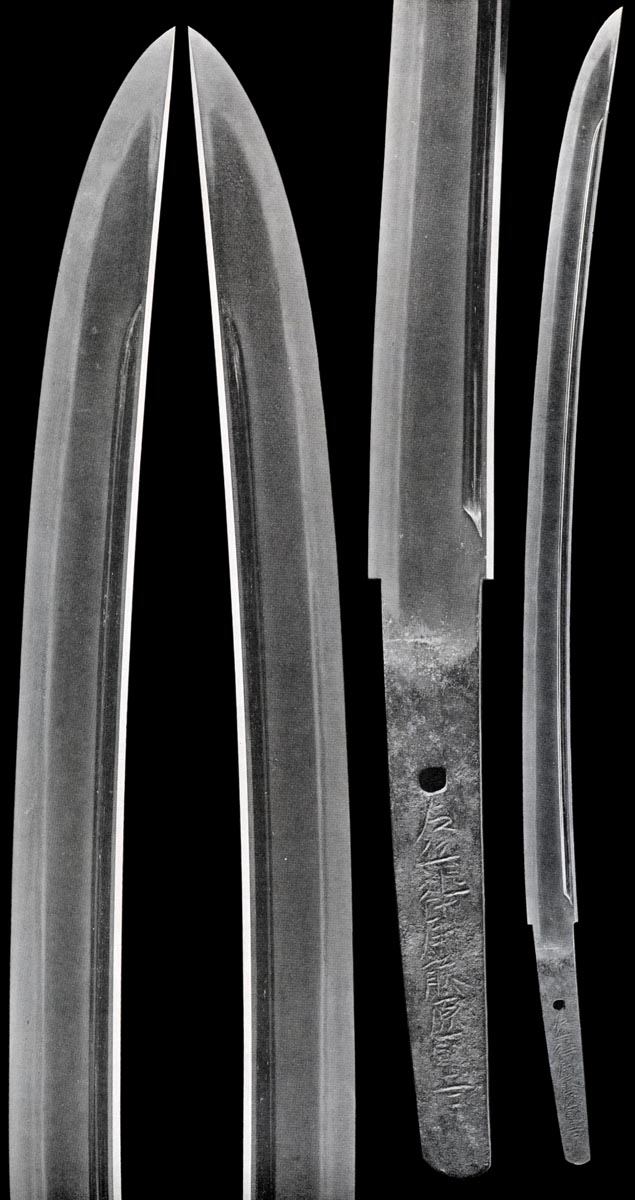 Kuniyoshi Koshigatana - Kokuho Nagasa: 54cm Moto-Haba: 2.8cm Hira-Tsukuri, Mitsu-Mune, O-Dambira style Belt-Sword. Ko-Itame Nashiji Hada profuse Ji-Nie and Chikei. Ko-Nie Deki and Nioi Fukashi Chu-Suguha of Ko-Midare with Ko-Ashi. The Habuchi of long Nijuba in Ko-Nie. Midare-Komi Boshi in Ko-Nie and Kinsuji. Togari on Omote, Ko-Maru on Ura. Long Kaeri. Ubu Kurjiri Nakago with one Mekugi-ana. Sabe-no-Jo Fujiwara Kuniyoshi |
KUNIMITSU(1) KEN-CHO (f: NORIKUNI, br: KUNIYOSHI): 2nd son. TOBEI.
        Old writers and new argue this name. One history has
        AWATAGUCHI KUNIMITSU and SHINTOGO, different periods
        of the same career. Dates for SOSHU YUKIMITSU and the
        KAMAKURA period of AWATAGUCHI KUNITSUNA tend to corral
        SHINTOGO into the latter century, where late KAMAKURA
        CHU-KISSAKI TACHI is expected. The early work of
        KUNIMITSU(1) would be the  mid-KAMAKURA IKUBI-KISSAKI
        SUGATA. KO-MOKUME with JI-NIE and AWATAGUCHI style,
        strongly standing NIE-UTSURI. KO-NIE in NIOI-FUKASHI
        HOSO-SUGUHA. HORIMONO, if found, are said to resemble
        that of SHINTOGO.
     KUNIMITSU
     AWATAGUCHI SABEInoJO KUNIMITSU

KUNIMITSU(2) SHO-AN (f: AWATAGUCHI KUNIMITSU): Son and student.
        SHINTOGO. Also SHINTOTARO. Conjectured to have had
        affiliation with the HASE-DERA Temple in YAMATO from
        which he started the HASEBE. He is known as the father
        of SOSHU stylists. A famous TANTO maker, his SUGATA
        often differs to the popular variations of YOSHIMITSU.
See treatment in SAGAMI
See Tokubetsu Juyo Shintogo Tachi
See Tokubetsu Juyo Shintogo Tanto
     KUNIMITSU
     SHINTOGO KUNIMITSU
     KAMAKURA JU HASEBE KUNIMITSU
     SHINTOGO KUNIMITSU HOSHI SAKU
     KAMAKURA JUNIN SHINTOGO KUNIMITSU
     SAGAMInoKUNI KAMAKURA JUNIN HASEBE KUNIMITSU


NAGAMITSU GEN-O (t: SHINTOGO KUNIMITSU): SABURO. See HASEBE.

YOSHIMITSU SHO-GEN (t: KUNIYOSHI, f: NORIKUNI):  See YOSHIMITSU
           School following.

KUNIYUKI SHO-GEN (f: KUNIYOSHI): RAI Founder. KO-MIDARE of OBUSA
        CHOJI MIDARE. Also called JUNIJIN. See treatment in RAI
        School following AWATAGUCHI

YOSHIMASA KAN-KI (t: KUNIYOSHI): KO-MOKUME. CHU-SUGU KO-MIDARE BA

KUNINOBU KO-CHO (t: KUNIYOSHI, f: NORIKUNI): GOROZAEMONnoJO and
        TOZA. Pieces are rare. KO-MOKUME HADA. KO-NIE SUGUHA and
        KO-MIDARE BA.
     KUNINOBU

KUNISADA BUN-EI (t: KUNINOBU): CHUJIRO. Transferred to AYABE in
        TAMBA as did other NORIKUNI line smiths. RAI KUNITOSHI
        style SUGUHA with KO-ASHI. See TAMBA
     KUNISADA

KUNINOBU SHO-WA: UMAnoSUKE. Took the name: TOSHIROSAKON. Moved to
        SAGAMI YAMANOUCHI
MASAMITSU BUN-O (t: NORIKUNI): MOKUME HADA. SUGUHA with ASHI. Students drift to TAMBA. TOSA YOSHIMITSU SHO-AN (t: MASAMITSU): There were four famous YOSHIMITSUs. AWATAGUCHI YOSHIMITSU is most important and most highly regarded, two BIZEN smiths and second in importance, TOSA YOSHIMITSU who started the TOSA School. He is seen to have SENJUIN and TEGAI influence and theorists have suggested he is the same man as SENJUIN YOSHIMITSU from YAMATO. MOKUME HADA has JI-NIE. HOSO- SUGUHA in NIE. YAMATO smith made KO-KISSAKI TACHI with slight KOSHIZORI. MOKUME with O-HADA shows JI-NIE however, HAMON may lean to unevenly placed GUNOME HA. |
____________________ AWATAGUCHI KUNIYOSHI RAI Founding Father HO-JI 1247 _______________|__________ ____________ ____|_____ _______|____ ____|____ ____|____ YOSHIMITSU RAI KUNIYUKI YOSHIMASA TADAYOSHI (t: HISAKUNI) | - SHO-GEN 1259 - KAN-KI 1229 KEN-CHO 1249 |________________________ _________________________ ____|____ ____|____ ___|___ YOSHIKUNI SHO-GEN 1259 YOSHIMASA(1) KEN-CHO 1249 YORIIYE ______________________| KA-GEN 1303 ____|____ ____|____ KUNITSUNA KO-AN 1278 YOSHIMASA(2) KA-GEN 1303 YOSHIMITSU SHO-GEN (t: KUNIYOSHI, f: NORIKUNI): Youngest.
|
Yoshimitsu
- Kokuho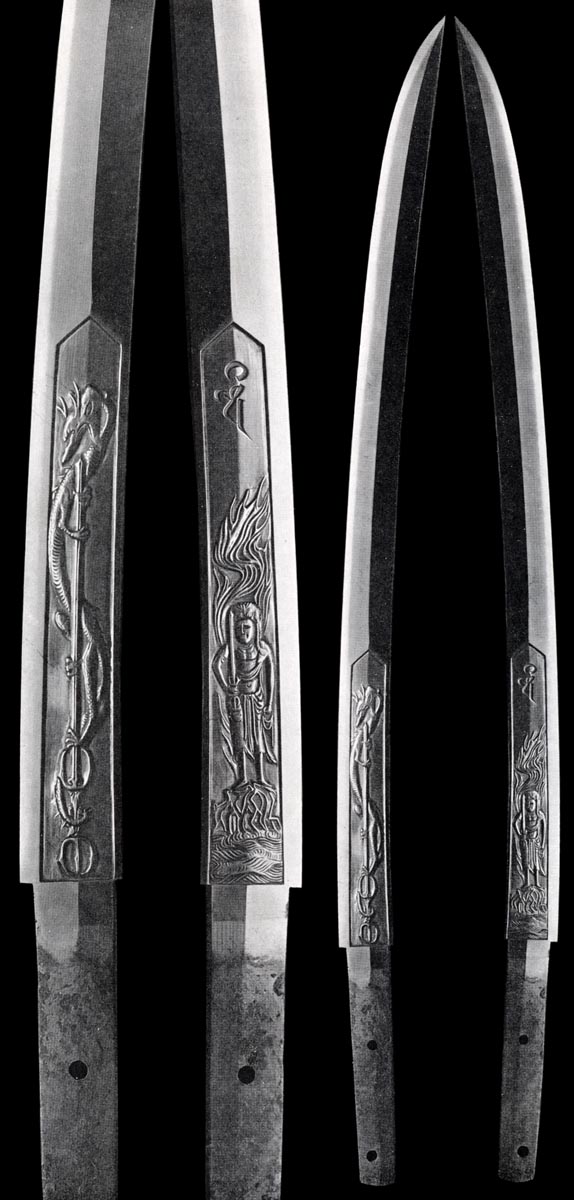 |
YAMASHIRO AWATAGUCHI YOSHIMITSU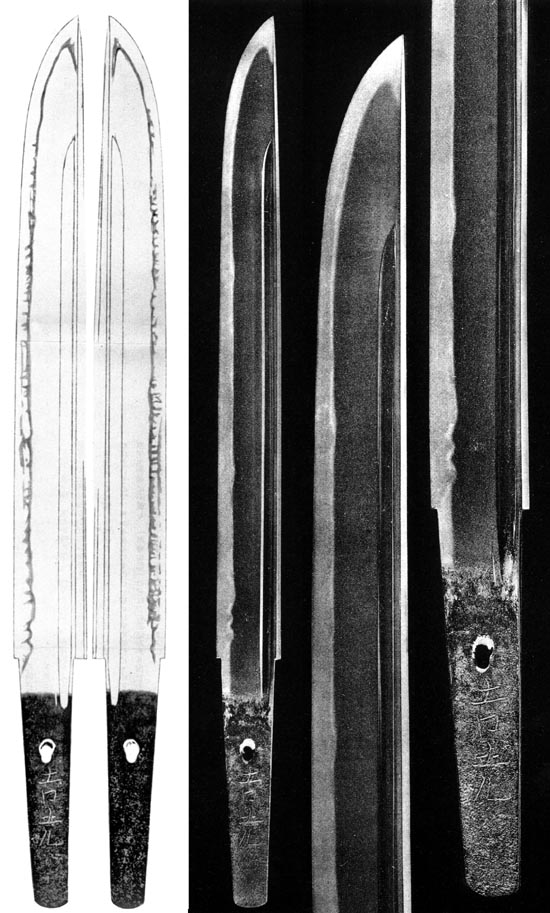 GYO-BUTSU HIRANO TOSHIRO - YOSHIMITSU TANTO Imperial Property
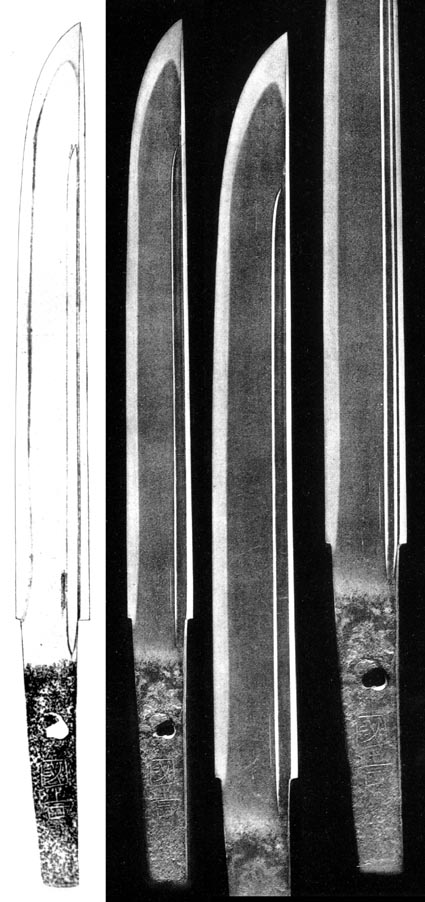
First listing in the KYOHO era MEIBUTSU. This is his brother's wide SUGATA, YOSHIMITSU made famous. His longest piece, its strength retains the simplicity that imbues his work. Small KO-ASHI cut and spill, carving a defined KO-GUNOME to the CHU-SUGU URA. NIOI-FUKASHI saturates to smooth the line where searching Sunagashi slips along the lower. OMOTE mounds find the YAKIDASHI but still hold restraint. ASHI breaks up strays in the mid. NIOI surfaces near the SAKI to pull a pointed KO-MARU from its medium fall. Straight falling KURIJIRI NAKAGO has lined, single MEKUGI-ANA above his two-character MEI. Yoshimitsu |
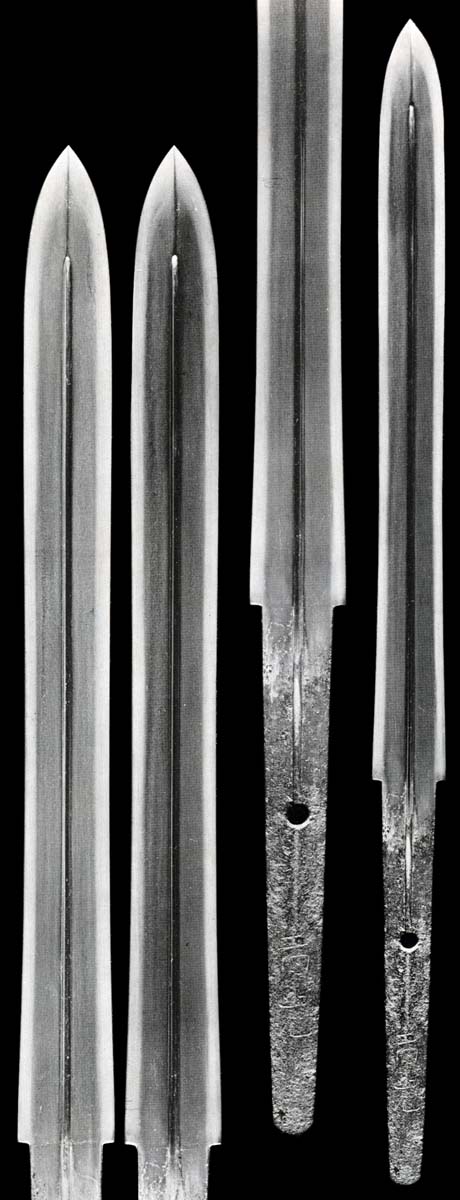 Yoshimitsu Ken - Kokuho Nagasa: 22.9cm Moto-Haba: 1.2cm Ken Shoto with small Hi making up the Shinogi. Ko-Itame as Nashiji Hada with thick Ji-Nie. Asaki-Notare Chu-Suguha in Nie-Fukashi with slight Ko-Midare and Ko-Ashi that develops Nijuba along the line. Boshi converges, Saagari to the Shinogi. Ubu, Kurijiri, one Mekugi-ana. Signed below. Yoshimitsu |
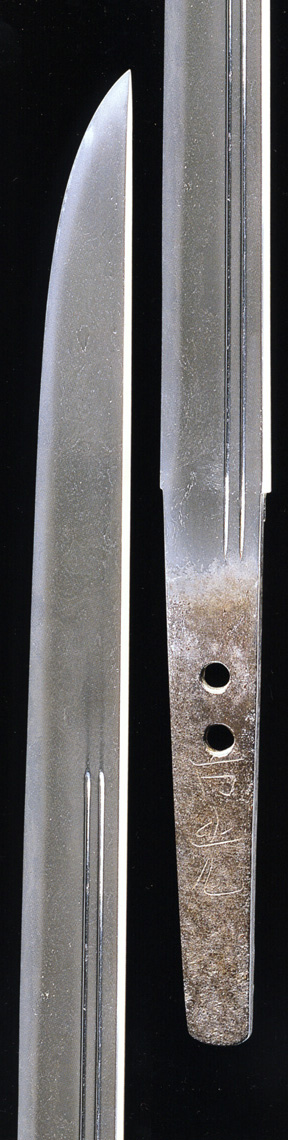 Tokyo National Museum |
Shinano
Toshiro - Kokuho Bunkazai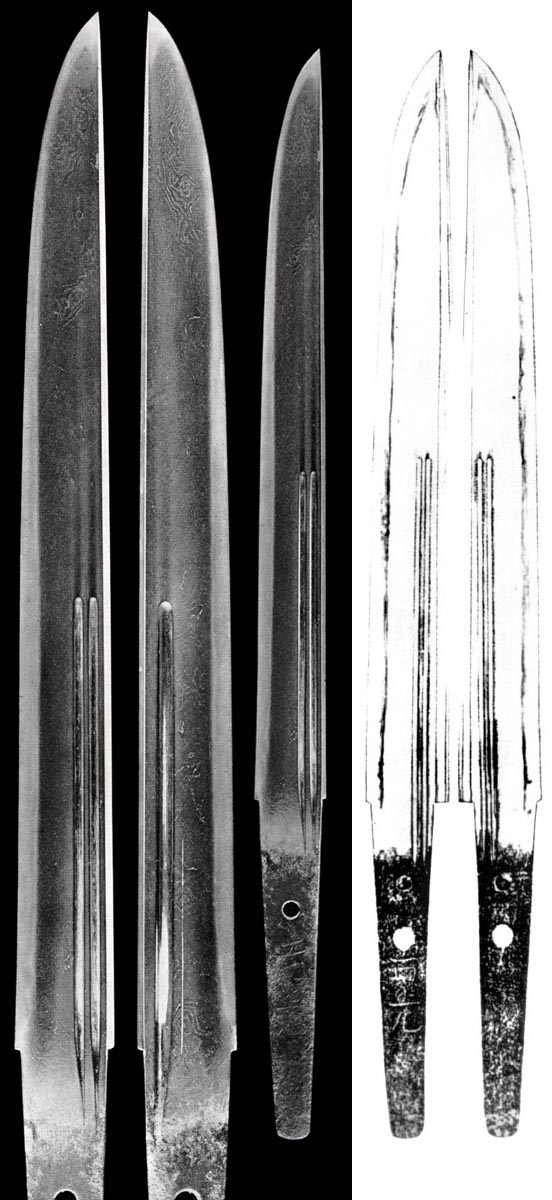 Shinano Toshiro - Bunkazai Nagasa: 24.6cm Moto-Haba: 2.2cm Hira-Tsukuri, Mitsu-Mune, wide, Toshiro Suguta Tanto. Ko-Itame Hada has O-Hada and profuse Ji-Nie and Chikei. Ko-Nie Deki Chu-Suguha Ko-Midare with Ashi-iri. Hamon narrows in the upper. Ko-Maru at the Saki with short Kaeri. Ubu Nakago has one Mekugi-ana. Yoshimitsu |
 Meibutsu Maeda Toshiro |
 Meibutsu Atsushi Toshiro |
MAEDA TOSHIRO |
ATSUSHI TOSHIRO |
YORIIYE KA-GEN (f: YOSHIMITSU): KO-MOKUME HADA. SUGUHA. YOSHIKUNI KA-TEI (t: YOSHIMITSU): KO-MOKUME. CHU-SUGUHA. YOSHIMASA(1) KEN-CHO (t: YOSHIMITSU): He and YOSHIMASA(2) became KOKAJI KAGENAGA and are root and founder of the INABA KOKAJI School. KO-MIDARE BA. See INABA. YOSHIMASA(2) KA-GEN: Became INABA KAGENAGA. See INABA. KUNITSUNA KO-AN to TOKU-JI (t: YOSHIMASA): Same name as SANEKUNI. SAGAMI. YAMANOUCHI KUNITSUNA. |
|