| © Copyright Robert Cole 2015
- No copying or distributing The Eight DO HOKURIKUDO - The Eight Roads of KOTO |


|
|
| GO
YOSHIHIRO:
Some narrow with KO-KISSAKI, some wide with O-KISSAKI.
KO-MOKUME has O-HADA. CHIKEI and JI-NIE.
O-NOTARE O-MIDARE BA. SUNAGASHI with defined KINSUJI and INAZUMA. Profuse NIE with NIOI-FUKASHI. Can be wide YAKI-HABA. MIDARE BOSHI or ICHIMAE. Note: School style changed as NAMBOKUCHO smiths hop-scotched the HOKURIKUDO. Influences to ECHIZEN, ECHIGO, KAGA and MINO. The HOKURIKU Provinces in the MUROMACHI became interwoven with MINO. In time we hear, "ECHIZEN-SEKI" & "KAGA-SEKI," the SENGOKU. |
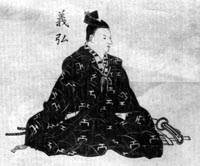 |
_______________ ETCHU NORISHIGE MATSUKURA GO YOSHIHIRO ____|____ "The Ten Students" YOSHIHIRO GEN-O 1319 SAGAMI KEM-MU 1334 "Best Student" |_______________________________ ___________________ ____|____ _________|____ ___________|____ YOSHIZANE(1) EN-GEN 1336 MINO TAMETSUGU ECHIGO NORISHIGE ____|____ EN-BUN 1356 TEI-JI 1362 YOSHIZANE(2) SHI-TOKU 1384 GO YOSHIHIRO GEN-O (f: NORISHIGE): GO-UMA-no-SUKE. "GO" is
|
|
KOKUHO MEIBUTSU INABA GO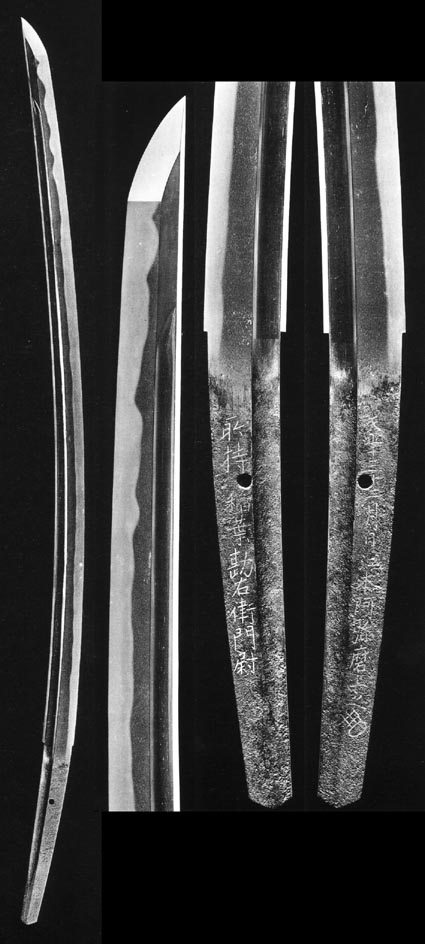
|
| MEIBUTSU NABESHIMA GO
Sword of NABESHIMA NAOSHIGE 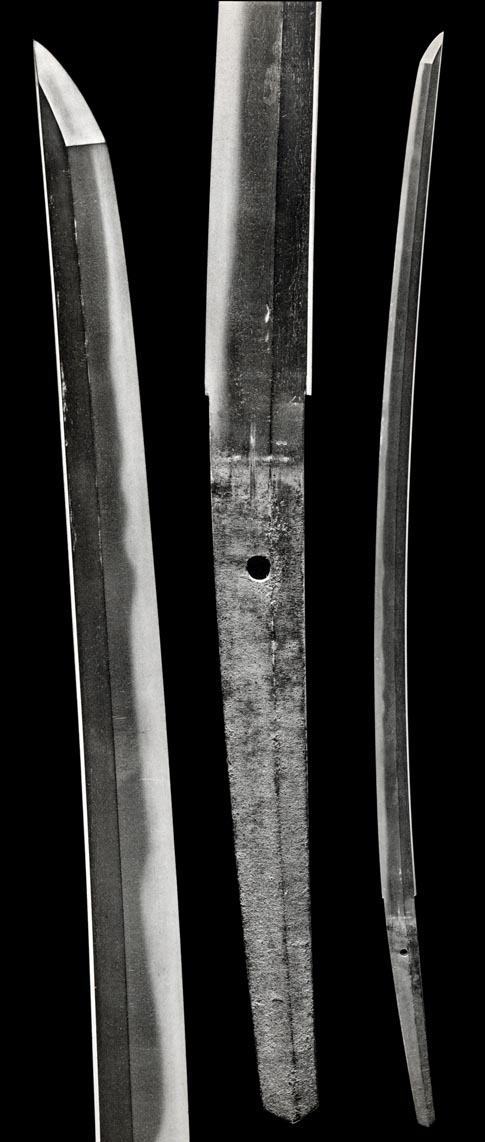 NABESHIMA NAOSHIGE broke away from the RYUZOJI, earlier vassals of the SHONI, and became independent. He helped HIDEYOSHI against the SHIMAZU and resided in SAGA, HIZEN. He survived the struggles in 1600 and held HIZEN Province. It was NABESHIMA HIZEN that supported the SHINTO TADAYOSHI School. NAGASA: 68.9cm SHINOGI-TSUKURI TACHI SUGATA with elongated CHU-KISSAKI. ITAME-HADA has JI-NIE. HAMON shows his typical flowing NOTARE holding GUNOME-MIDARE BA in deep NIOI and KO-NIE. O-SURIAGE NAKAGO has the GO KENGYO style JIRI. |
| KAI-no-KUNI GO | Sword of TAKEDA SHINGEN |
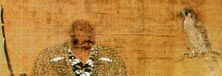 |
See Shingen |
|
 |
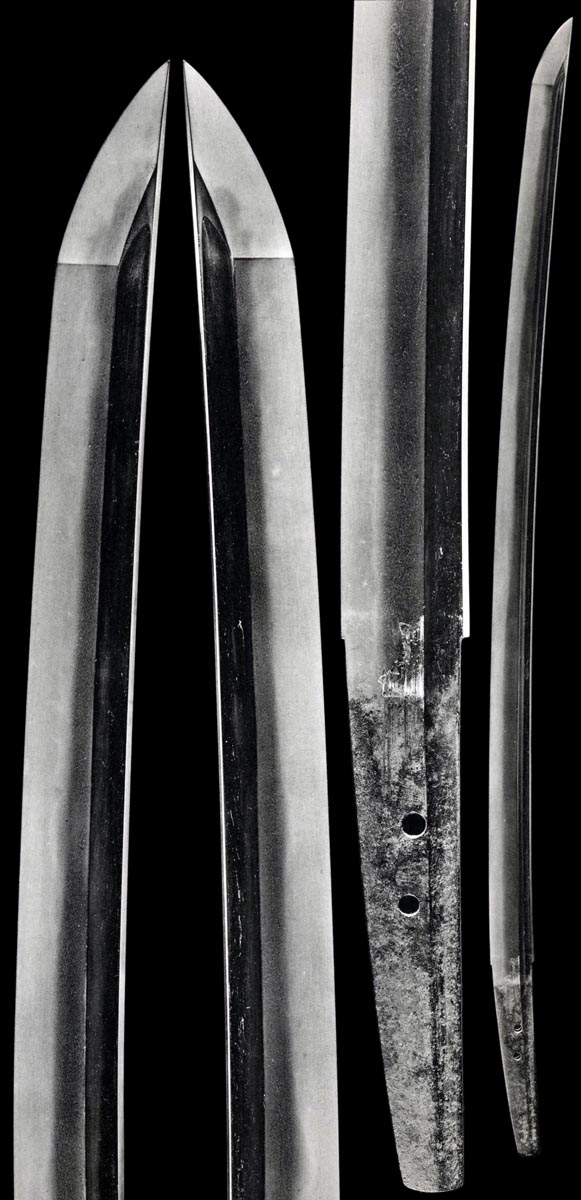
| NAGASA: 2.1 SHAKU
SORI: 5 BU NAKAGO: 5.9 SUN |
MOTO-HABA: 9 BU SAKI-HABA: 6 BU |
| SHINOGI-TSUKURI,
MARU-MUNE. A medium HI replaces the SUJI line of
the raised SHINOGI ridge.
Long and running ITAME HADA stretches through the SHINOGI-JI, while CHIKEI runs in swirling, and tightly knit, MOKUME HADA in the JI. Lively and colorful JI-NIE stand shinning. Crevasse and
ravine-like KO-ASHI and YO cut and pull an
intricate KO-GUNOME BA into a unique,
multi-leveled KO-MIDARE YAKIBA. The coordinated
HATARAKI of one layer transposes itself into
another. A reaching MUNE-YAKI
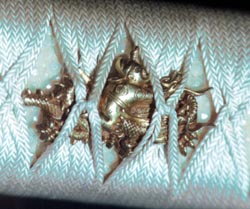
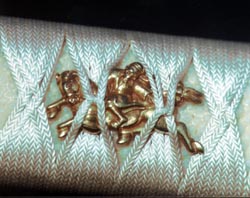
spills down the OMOTE. Superior steel allows the KAI-GO a wet moisture and dreamy surface-color. Two MEKUGI-ANA NAKAGO has the famous and unusual SU-KEN HORIMONO, on TACHI-OMOTE, testifying IYEYASU's SURIAGE repair. |
|
Go
to: Koshirae _______________________________ View Layout Version pdf
|
Meibutsu
Kuwana Go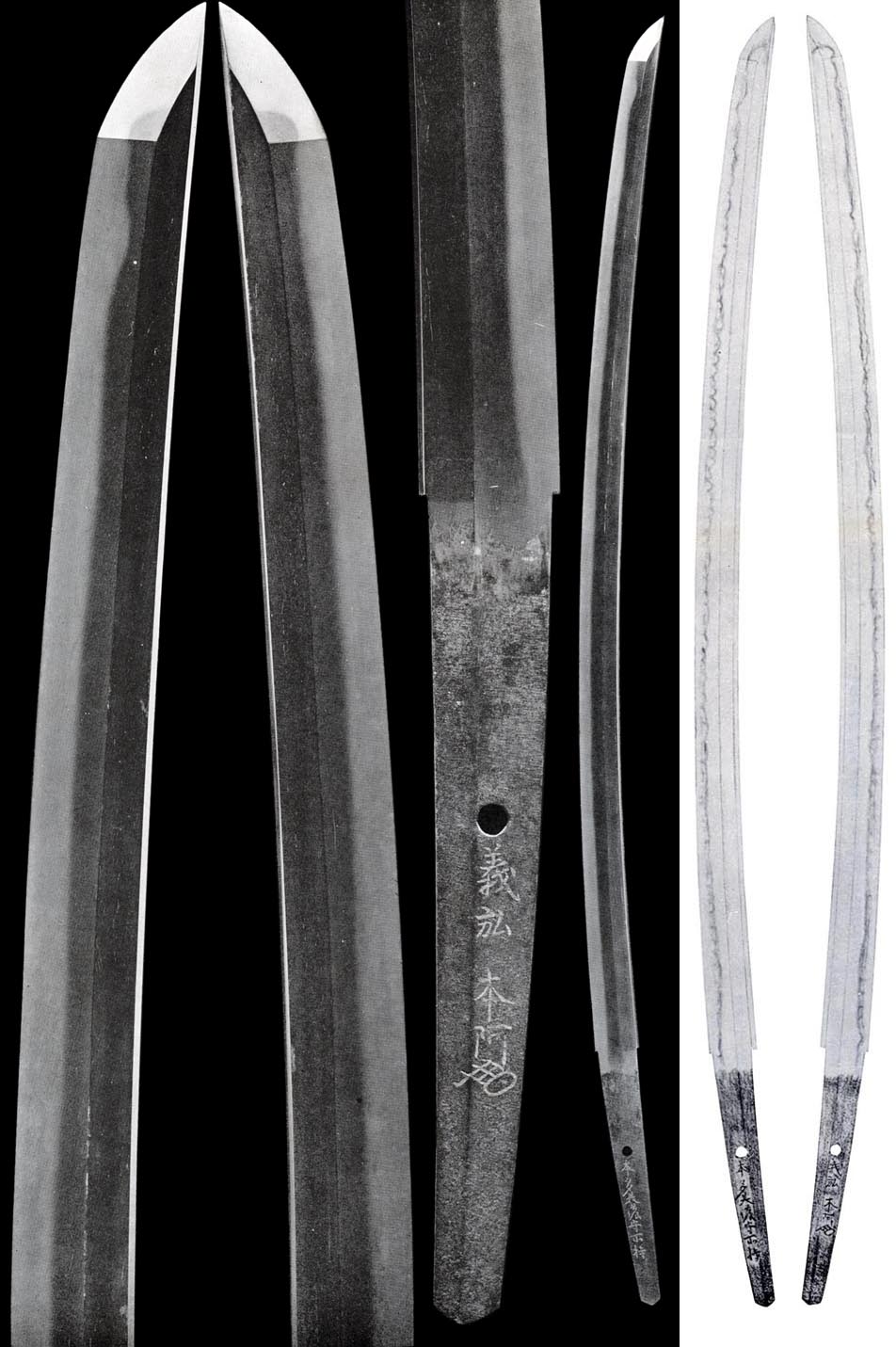
|
ETCHU GO YOSHIHIRO Group
YOSHIZANE(1) EN-GEN (f: YOSHIHIRO): MATSUKURA JU. Worked along the HOKURIKUDO for the North. ECHIZEN and KAGA. ITAME. SUGUHA and NOTARE. 2nd: SHI-TOKU, smithing in ECHIZEN. MEI: YOSHIZANE ECHIZEN-no-KUNI TACHIBANA YOSHIZANE ECHIZEN-no-KUNI JU TACHIBANA YOSHIZANE TAMETSUGU EN-BUN (f: YOSHIHIRO): From EN-BUN 1356 to O-AN 1368. Son and student. To ECHIZEN and MINO. IHORI-MUNE TACHI and KO-WAKIZASHI are wide.MU-SORI MITSU-MUNE TANTO or shallow curve.ITAME of MASAME or MOKUME UZU-MAKI HADA with JI-NIE and CHIKEI. KO-NIE DEKI SUGU KO-NOTARE, or KO-GUNOME with ASHI and YO. SUNAGASHI and YUBASHIRI. BOSHI is MIDARE with HAKIKAKE. HOTSURE from the line. MEI: FUJIWARA TAMETSUGU FUJIWARA TAMETSUGU SAKU ESSHU JU FUJIWARA TAMETSUGU NOSHU JU FUJIWARA TAMETSUGU NOSHU JU FUJIWARA TAMETSUGU SAKU ECHIZEN-no-KUNI FUJIWARA TAMETSUGU YOSHIHIRO TEI-WA (t: GO YOSHIHIRO): HIRO form: KWANG "Shed." Possibly the same as GO YOSHIHIRO. MEI: ETCHU-no-KUNI MATSUKURA JU YOSHIHIRO NORISHIGE TEI-JI (t: GO YOSHIHIRO): Working in ECHIGO, ETCHU and SAGAMI. NIE-DEKI KO-MIDARE BA. MEI: ECHIGO-no-KUNI JU NORISHIGE |
|