| © Copyright Robert Cole 2015
- No copying or distributing YAMASHIRO YAMASHIRO RAI KUNITSUGU School |


|
|
__________________________
"Two-characters" KUNITOSHI
________|____
RAI KUNITSUGU "Ten Students" GEN-TOKU 1329 See Ten Students
________|____
RAI KUNITSUGU(2) (KUNIHIDE) SHO-KEI 1332
        |__________________ ________________________________
________|____          ____|____                ____________|____
RAI HIDETSUGU TEI-JI   SADAMITSU -RYAKU-O 1338- ECHIZEN MUNEMITSU
    ____|___     1362                    ___________________|
    SUYEYUKI(1) BUN-WA 1352         ____|____ -brothers-____|____
        |____________ __________    SHIGEKUNI    SETTSU YOSHIKUNI
    ____|___     ____|____  ____|____      - EN-BUN 1356 -
    SUYEYUKI(2)  SUYETSUGU  SUYEYOSHI
             - EI-TOKU 1381 -

"The Ten Students"
RAI KUNITSUGU(1) GEN-TOKU (t: KUNITOSHI): SABUROUEMON. Cousin or
        brother-in-law of KUNIMITSU. Work from KA-REKI 1326 to
        SHO-KEI 1332 making MITSU-MUNE, HIRA-TSUKURI O-TANTO and
        wide KO-WAKIZASHI of slight SORI. There are few TACHI.
        Standing ITAME-HADA shows CHIKEI under strong JI-NIE.
        KINSUJI cuts ASHI within KO-NIE FUKASHI KO-MIDARE or
        GUNOME-MIDARE that holds to a gentle NOTARE roll. YAKIBA
        is clear and may flare outside the HAMON as TOBI-YAKI or
        SHIMA-BA. Or in the JI as YUBASHIRI. KINSUJI "feet" face
        each other from the reach of falling ASHI. In the classic
        view,  these are called SAGARI-ASHI "falling" and
        AGARI-ASHI "rising." They may connect forming long
        KINSUJI. SUGUHA to KO-MARU BOSHI or perhaps MIDARE with
        TOGARI-KAERI. Carved HI and HORIMONO of BONJI, KEN or
        GOMABASHI, usually along the MUNE. His works of TANTO
        having GUNOME within an ASAKI-NOTARE line reflects his
        SOSHU School experience. See Tokubetsu Juyo Rai Kunitsugu
|
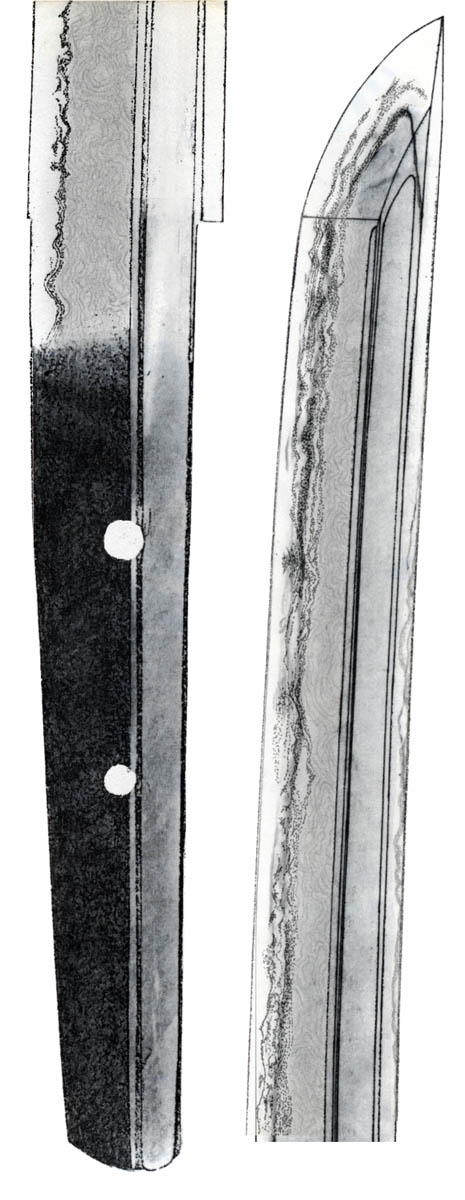
KOKUHO RAI KUNITSUGU 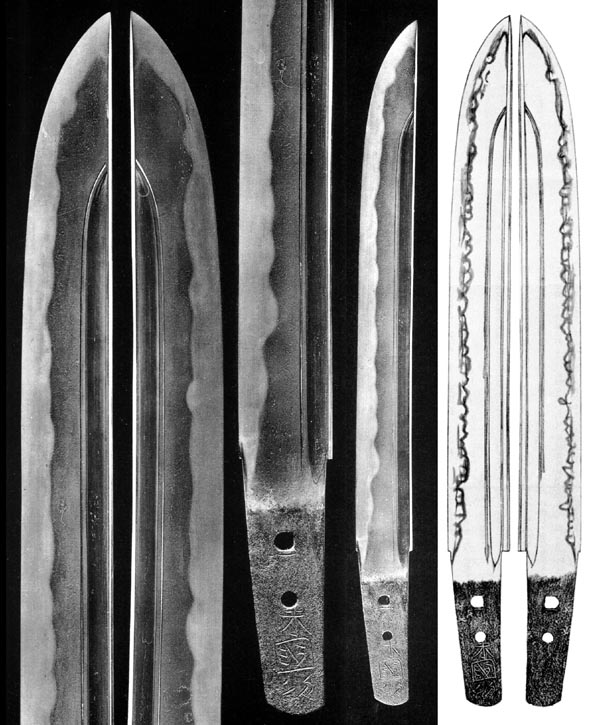
HIRA-TSUKURI, MITSU-MUNE, slight SORI. A groove-lined BO-HI mimics an absent SHINOGI enhancing the stately appearance which follows its wide, straight lines. The very fine ITAME HADA has CHIKEI and clear, profuse JI-NIE. TOGARI finds roosts on uneven GUNOME. KINSUJI and SUNAGASHI draw a flat plain through far and near jutting rises. TAMA rolls down the BOSHI while SHIMA-BA hangs lazily. KINSUJI furrows the MONOUCHI. KO-MARU pulls a reticent KAERI onto the MUNE. UBU NAKAGO with two MEKUGI-ANA. Signed in the lower:RAI KUNITSUGU |
Rai
Kunitsugu - Kokuho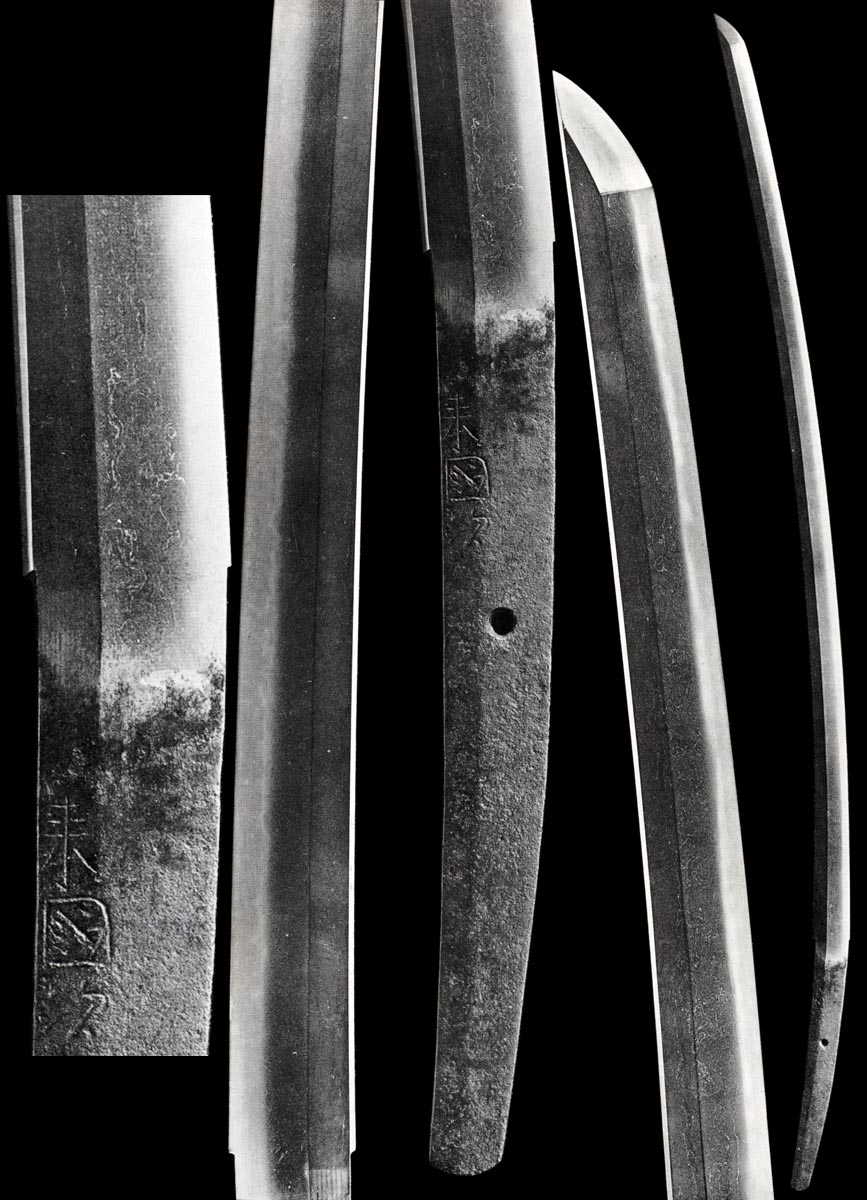 Rai Kunitsugu - Kokuho Nagasa:82cm Moto-Haba: 3.1cm Large and strong Shino-gi-Tsukuri, Ihori-Mune, Chu-Kissaki Tachi. Standing Itame Hada has Rai Hada and Ji-Nie. Gunome Ko-Midare Ba in Nie and Nioi-Fukashi striated with Sunagashi creating small Tobi and Nijuba and Kuzure Ba effects. Ubu Kurijiri with one Mekugi-ana. Signed in the upper Ji. Rai Kunitsugu |
| Juyo-Bijutsu-Hin Rai Kunitsugu Possession of the TOKUGAWA | ||
 |
||
|
Bunkazai Rai Kunitsugu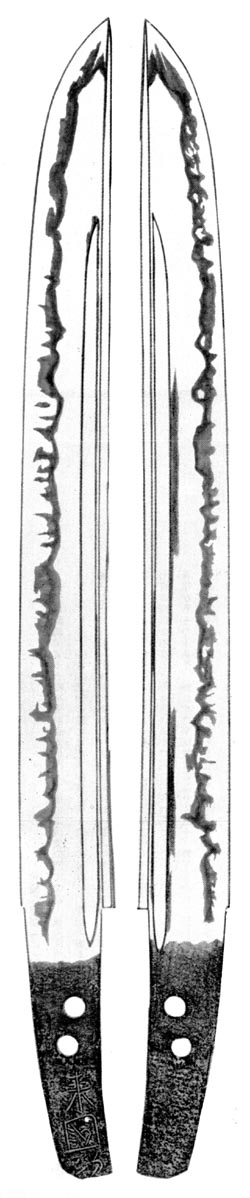
|
YAMASHIRO RAI KUNITSUGU School
KUNITSUGU(2) SHO-KEI: RAI HIKOTARO. Also signed RAI KUNIHIDE
|
|
|