|
|
|
|
________ SANENARI EI-EN 987 Note: See KO-BIZEN technicals |________________________ for appraisal overview ___|____ - brothers - ___|____ TOMONARI SHO-RYAKU 990 SUKENARI EI-EN 987 | ___|____ | TOMOYASU KAN-KO 1004 |___________ ______________ ___|____ __|_____ ___|____ TOMONARI MUNEYASU SUKETOMO KAN-KO 1004 KAN-JI 1087 KAN-KO 1004 ___|____ SUKEHIDE CHO-RYAKU 1037 ___|_____ SUKECHIKA KO-HEI 1058 SUKENARI EI-EN (br: TOMONARI): TOMOYASU KAN-KO (f: SUKENARI): BIZEN-no-KUNI TOMOYASU TOMONARI SHO-RYAKU (f: SANENARI): Born: TEN-RYAKU 6 (952). Made Mid HEIAN SUGATA. A signed piece in the YAMASHIRO tradition could be found. SUGU KO-MIDARE HA to SUGU GUNOME CHOJI KO-MIDARE BA in KO-NIE has KINSUJI. Look for NIJUBA. See following page for late HEIAN TOMONARI of NIN-PYO 1151. MUNEYASU KAN-KO (f: TOMONARI): Work to MAN-JU 1044. MOKUME with MASAME. KO-NIE SUGUHA and KO-MIDARE CHOJI BA with ASHI. SUKEHIDE CHO-RYAKU (f: TOMONARI): Work to JI-RYAKU 1065. CHOJI- MIDARE BA. SUKECHIKA KO-HEI (f: SUKEHIDE): TOMONARI line. To JI-RYAKU 1065. MOKUME HADA. NIOI KO-MIDARE BA and KO-CHOJI BA. |
________ Note: See KO-BIZEN technicals TOMONARI NIN-PYO 1151 for appraisal overview |______________________ ______________ ___|____ ___|____ ___|____ TOMONARI KA-TEI 1235 MUNEYASU SUKETOMO SHO-GEN 1207 ___|____ KA-TEI 1235 ________ TOMONARI BUN-EI 1264 TOMOMURA KEN-RYAKU 1211 ________________ ________ OSAFUNE TOMONARI KEM-MU 1334 YUKIHIDE TEM-PUKU 1233 ___|_____ YUKITSUNE KAN-GEN 1243 TOMONARI NIN-PYO: Classic writing tells us EI-EN TOMONARI and MASATSUNE are the founding fathers and originators of KO-BIZEN. Study of present swords allows a time spread for TOMONARI between KAN-JI 1087 and NIN-PYO 1151 with the SUGATA style of late HEIAN to early KAMAKURA. A profusion of pieces appear and are similarly marked |
Tomonari
- Kokuho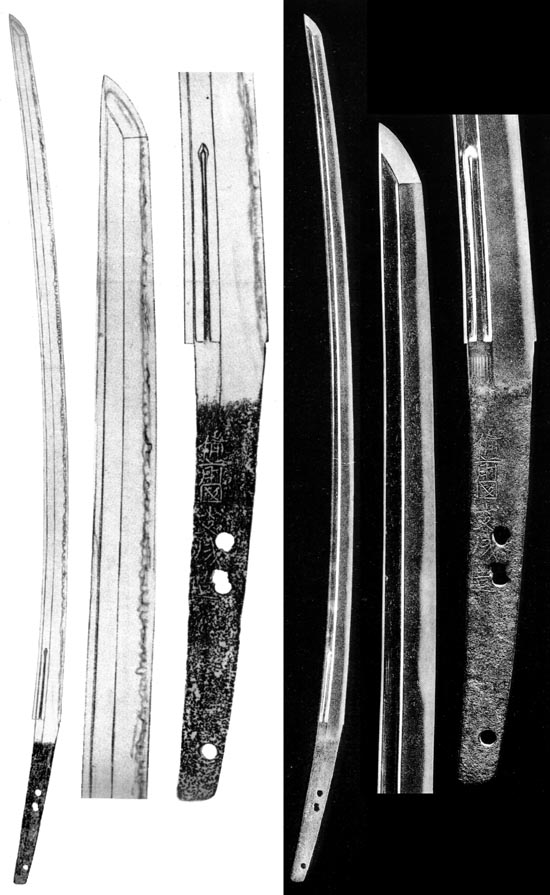 KOKUHO TOMONARI National Treasure
SHINOGI-TSUKURI, IHORI-MUNE, narrow KOSHIZORI TACHI. The upper straightens to the small and somewhat elongated KO-KISSAKI, which sits high up on this long and evenly closing late-HEIAN FUNBARI SUGATA. A wide BO-HI occupies the whole of the SHINOGI-JI from the KO-SHINOGI to the MACHI, where a thin 2.6 SUN SU-KEN HORIMONO slips like a pier into the BO-HI well. CHIKEI wrestles standing KO-ITAME under JI-NIE and NIE-UTSURI. YAKIBA: The NIOI HABUCHI is Fukashi while SUNAGASHI sweeps a vague NIJUBA through its crowded KO-GUNOME. KINSUJI carves brightly as drifts of KO-NIE and NIOI HOTSURE are pulled into the JI. Stands of defined CHOJI become almost DAI-BO in the mid but UTSURI joins HAKIKAKE to brush a soft fog to the lower. A NIJU ghost walks the smooth BOSHI to KO-MARU with slight KAERI. The UBU NAKAGO has three
multiple-cut MEKUGI-ANA and his six character MEI:
|
|
Go
Uguisu-Maru
"The
Nightingale" Tomonari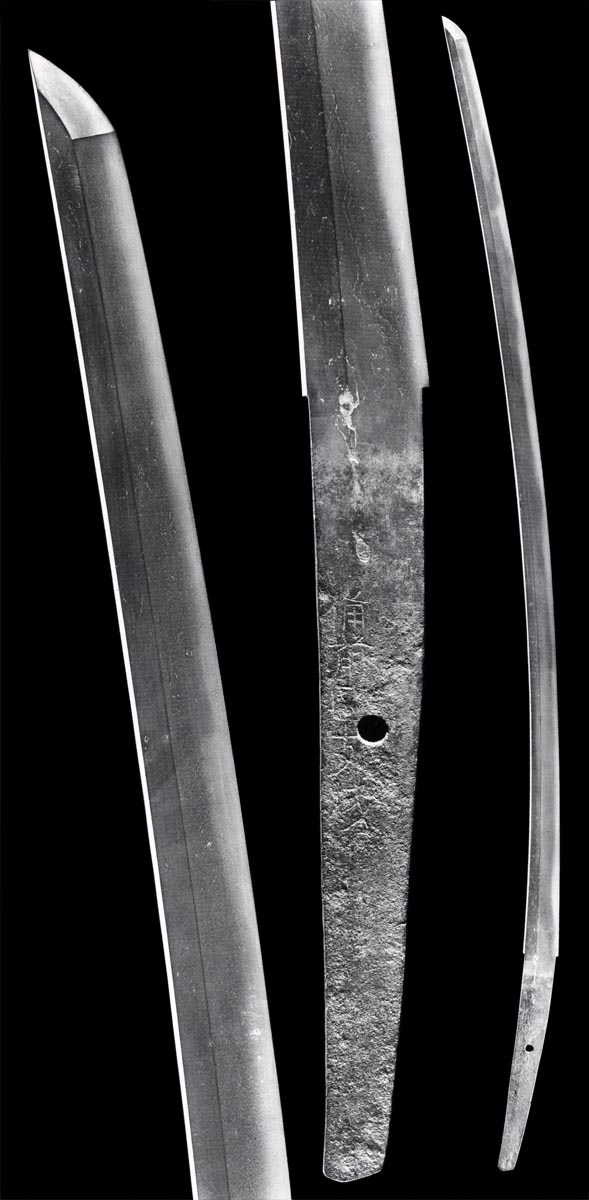 Go Uguisu-Maru Tomonari Nagasa: 81.8cm Sori: 2.7cm Held by Ogasawara family until given to Emperor Meiji. Shinogi-tsukuri, Ihori-mune Heian Tachi. Itame Hada with thick JiNie has Midare-Utsuri. Sugu Ko-Midare with Ashi and Yo. The line becomes Notare in the upper. Ubu, Haagari, one Mekugi-ana. Signed: Bizen-no-Kuni Tomonari |
SUKETOMO SHO-GEN (f: TOMONARI): MOKUME HADA with MASAME. SUGUHA, KO-MIDARE BA and KO-CHOJI MIDARE with ASHI in KO-NIE. TOMOMURA KEN-RYAKU: To KEN-CHO 1249. KO-MIDARE of KO-CHOJI BA in NIE. |
KOKUHO TOMONARI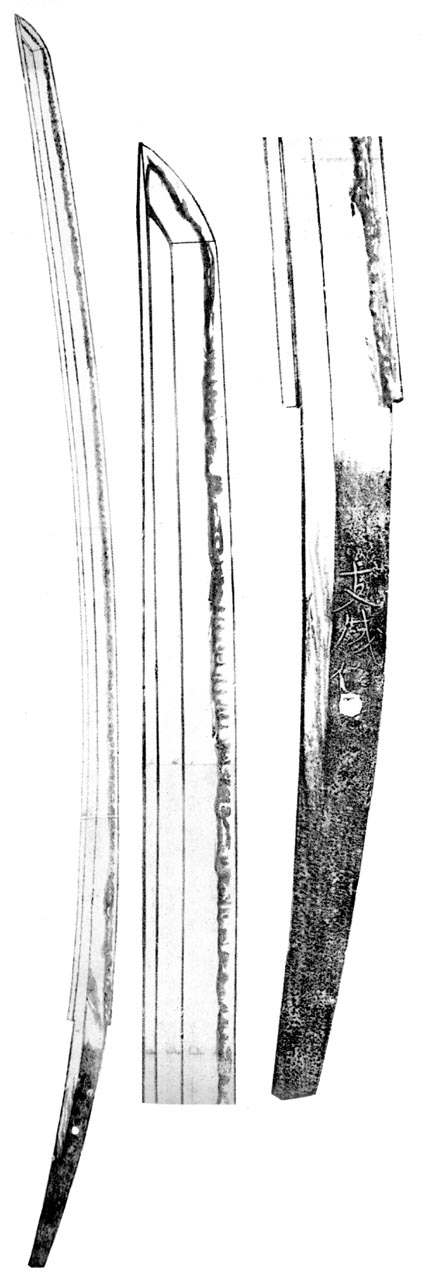 KOKUHO TOMONARI NAGASA:
79.4cm SHINOGI-TSUKURI, IHORI-MUNE. Small KO-KISSAKI stands strongly from KOSHIZORI TAKA FUMBARI, late-HEIAN style TACHI SUGATA. A BO-HI falls into the NAKAGO. Made with the classic elegance of the grand masterworks. KO-ITAME HADA has a thin veil of JI-NIE. The deep NIOI HAMON is an ASAKI-NOTARE CHU-SUGUHA where KO-GUNOME and KO-CHOJI battle KINSUJI and SUNAGASHI in a great travail. A near KOSHIBA rises in the lower. UBU with one hole, signed above.
|
Tomonari
- Kokuho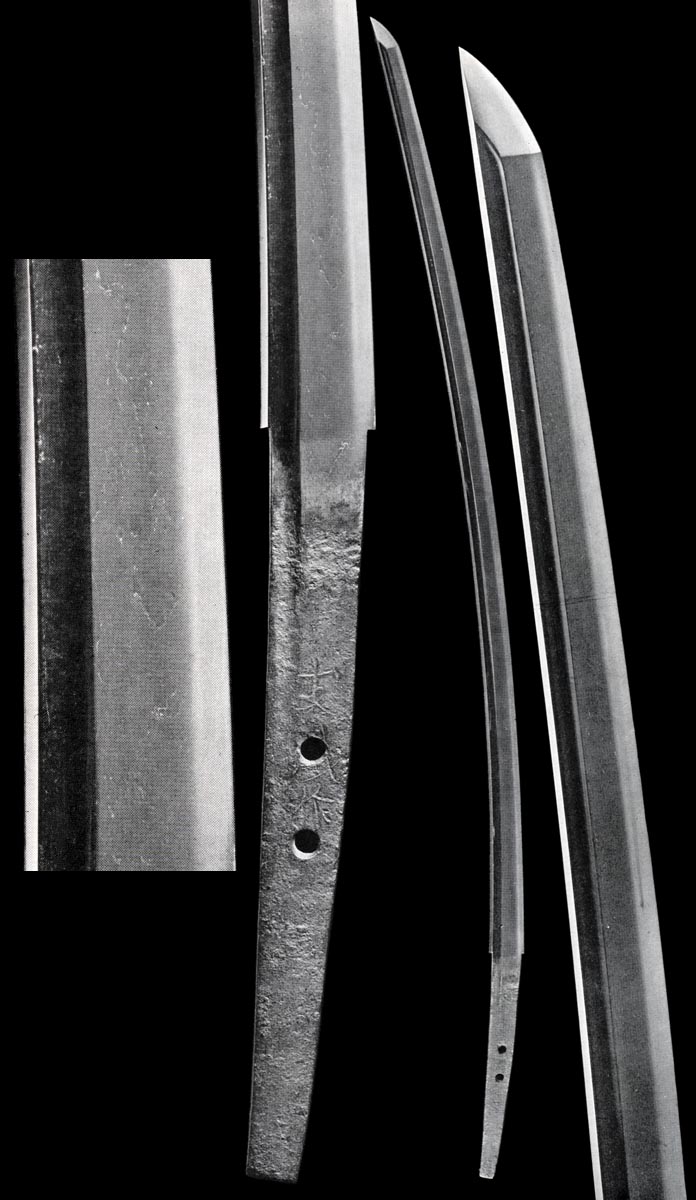 Tomonari - Kokuho Nagasa: 73.3cm Moto-Haba: 2.6cm Shinogi-Tsukuri, Ihori-Mune, wide Ji, Koshizori, elongated Ko-Kissaki. Bo-Hi extends into the Nakago. Ko-Itame with O-Hada has Ji-Nie and Midare-Utsuri. Chu-Sugu Ko-Midare has Togari and Ko-Choji Ba with Ashi-iri developing in the mid. The Monouchi becomes deserted to the Boshi. Boshi is Chu-Sugu Asaki-Notare to Yakizume, omote and Midare-Komi Hakikake on Ura. Slightly Machi-Okuri Kurijiri, Ubu Nakago has two Mekugi-ana. Tomonari Saku |
Suketomo
- Kokuho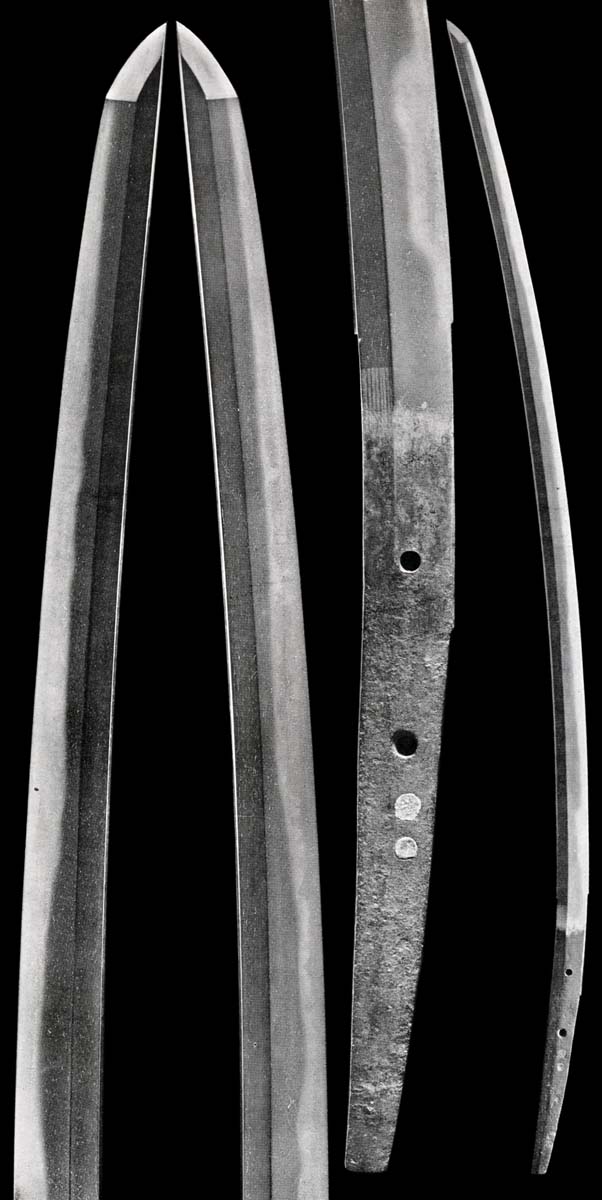 Suketomo - Kokuho Nagasa: 63.2cm Moto-Haba: 2.4cm Shinogi-Tsukuri, Ihori-Mune, Koshizori, elongated Ko-Kissaki. Standing Itame Hada has Ji-Nie and Utsuri. Rolling Notare Hamon holds Gunome Choji-Midare Ba with Togari with Ashi-iri. Large Koshiba on Omote. Hoso-Sugu Asaki-Notare, Ko-Maru Boshi. Ubu, very slight Kurijiri Kijimono Nakago has four Mekugi-ana, two are filled. ( x )Tomo |
Mid-KAMAKURA TOMONARI School
TOMONARI KA-TEI: TOMONARI line KO-BIZEN. This work resembles
        FUKUOKA ICHIMONJI with mid-KAMAKURA SUGATA of wide upper
        and IKUBI KISSAKI. ICHIMONJI style CHOJI-MIDARE.
TOMONARI BUN-EI (f: TOMONARI): Thought the father of EN-KEI TOMONARI. His will be tune-of-the-time: Jutting GUNOME through CHOJI-MIDARE in NIOI. The line is a fairly even course. BUN-EI TOMONARI: MIDARE BOSHI with O-MARU to YAKIZUME. TOMONARI in OSAFUNE for KEM-MU 1334 and in TEN-MON 1532, signing his forebears' KIMI BANZAI. MUNEYASU KA-TEI (br: TOMONARI): Narrow TACHI. Running ITAME HADA has JI-NIE. NIE KO-MIDARE BA and NIJUBA style KO-CHOJI MIDARE BA. MIDARE-BOSHI. Signed near the MUNE. MEI: BIZEN-no-KUNI MUNEYASU SAKU YUKIHIDE TEM-PUKU: Late KO-BIZEN. KO-ITAME HADA. KO-MIDARE of KO-CHOJI BA ASHI in NIE. Small MEI. YUKIHIDE YUKITSUNE KAN-GEN (t: YUKIHIDE, f: YUKIMUNE): YUKIMUNE descended from SUKEYUKI. A KO-BIZEN line, it is included with SUKEYUKI in FUKUOKA. See FUKUOKA SUKEYUKI |
|