| © Copyright Robert Cole 2015
- No copying or distributing YAMATO |


|
|
NARA School      AMAKUNI - AMAKURA - SHINSOKU

                                            Emperor KEITAI-TENNO
________                                              ___|___
FUJIMORI                                              AMAKUMO
TAI-HO 701                                            KEI-TAI 507
                                  TEGAI TOMOMITSU:
_______                                Root of Roots
AMAKUNI TAI-HO 701
   |________________ _________ _______ ____________
___|___          ___|____  ___|__  ___|_____    ___|___
AMAKURA TAI-HO   TADAMIZU  AMASHO  TOMOMITSU    SHOICHI
(AMAZA)     701                    ___|____
                                   TOMOKUNI WA-DO 708
_________
KUNIYOSHI JIN-KI 724
_________                  ____________________________
SHIGENORI                  GEKKO - SEISHINDAYU YASUNORI EI-EN 987
TEMPYO-HOJI 757                        ________|___
_______ _______                        HOKI AMAHARA SHO-RYAKU 990
AMAYUKI AMAFUJI                        _______
- DAI-DO 806 -                         ARIKUNI KAN-KO 1004


AMAKUNI: MASAME with YUBASHIRI-HADA. JI-NIE.
         HOSO-SUGU with NIJUBA-like effects.


SHINSOKU: Herded by HACHIMAN to BUZEN (see BUZEN)


AMAFUJI DAI-DO: AMAFUJI made a sword for the spirit KASUGA MYOJIN
        who is AME-no-KOYANE-no-MIKOTO residing in NARA at the
        KASUGA-no-MIYA Shrine. SUGUHA.

SHOICHI TAI-HO: Possibly an alternate name for HOKI SANEMORI.
                                               See HOKI
|
KOGARASUMARU

   There were more than one KOGARASUMARU. It is a name given to a
   famous sword. A sword of a type. Perhaps it was thought of as the
   true Japanese sword, residing in a world of Chinese style
   KIRIHA-TSUKURI. It is thought that the KOGARASUMARU was the
   inspiration for the curved, single-edged HANCHO-TO which was
   apparently necessitated as a shock reducer for fighting from horseback.

   There are two or three true KOGARASUMARU swords known to exist
   today. There are, of course, many reproductions and reverently
   made swords of varying quality.


KOGARASUMARU
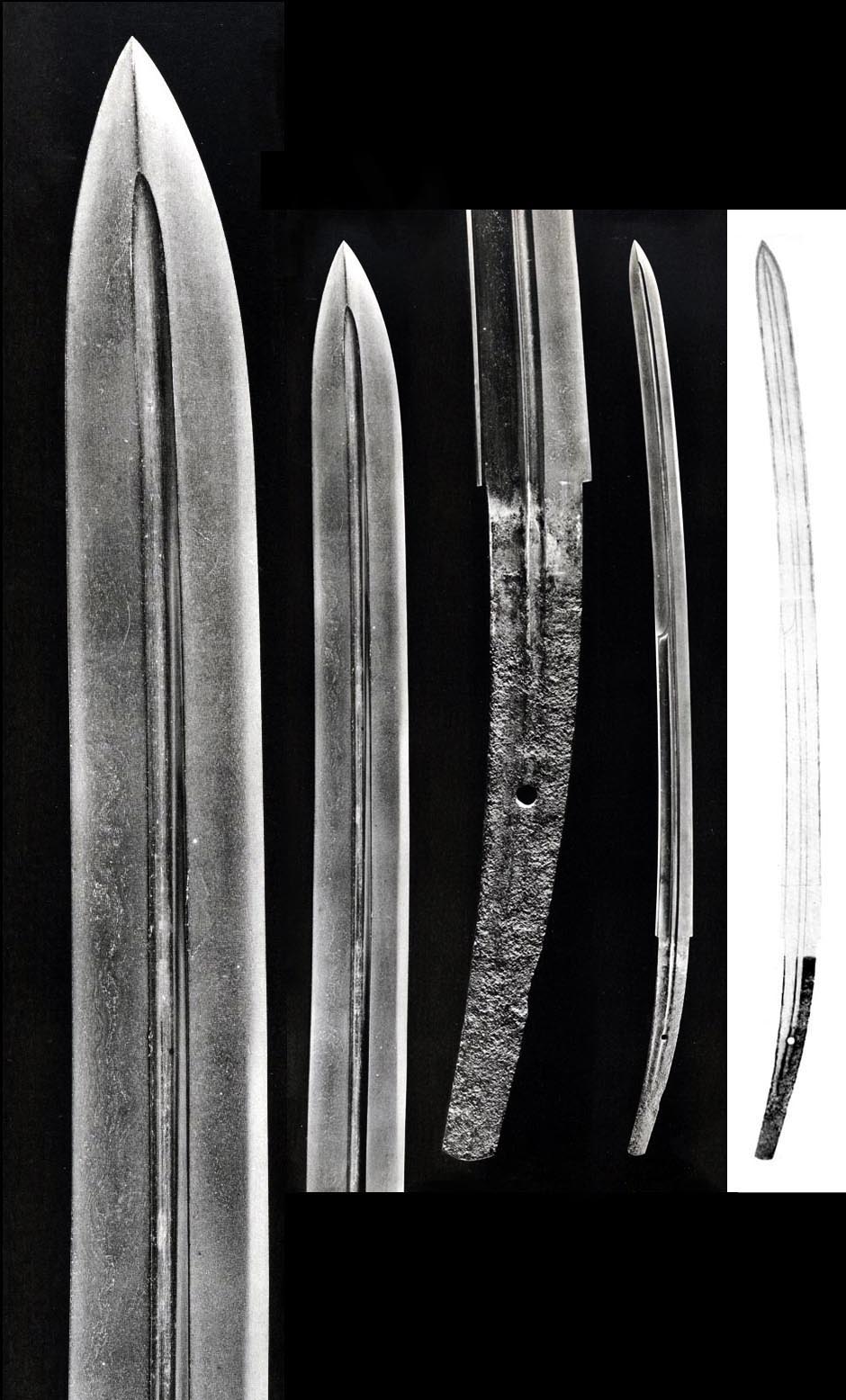 |
KOGARASUMARU - GYOBUTSU               NAGASA: 2 SHAKU 6.5 BU
  AMAKUNI TAI-HO 701                         SORI: 4 BU
   Imperial Treasure                    MOTO-HABA: 1.1 SUN
HO-RYOBA-TSUKURI (double-edged point)      NAKAGO: 6.4 SUN

Its praises are sung in the MAN YOSHU or "Collection of 10,000
Leaves" - ca. 750. The fame and study of this piece helped
transform the vision of the sword for its new ideal. It is still
of the highest importance in the study of the Japanese Sword.
TACHI of light curve and little FUNBARI - the NAKAGO has greatest
arc. This is certainly one of the most distinctive swords in all
of history.

NAGINATA-HI and strong SHINOGI-BOHI, the SAKI of which forms the
support structure for the MONOUCHI.

The ITAME is running HADA with JI-NIE. YAKIBA pattern is a thin
HOSO-SUGUHA that deepens as it reaches the upper. NIE combines
with NIOI to pull an almost HOTSURE-effect on the line, which
continues through KO-MARU BOSHI.
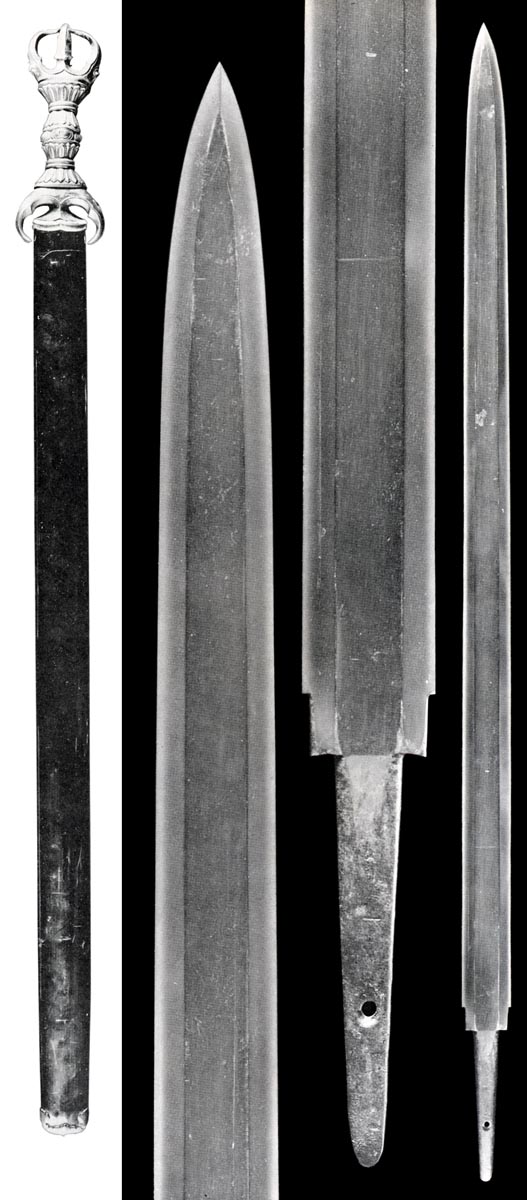 Sanko Hei Kokushitsu Saya Tsurugi Koshirae Nagasa: 62.3cm Moto-Haba: 3.2cm Sanko Vajra handle and Black Kokushitsu Saya Kiriha-Tsukuri of the Kasauga Jinja. Ko-Itame Hada with Ji-Nie. Hoso-Sugu Ko-Midare Ba of Nioi-Fukashi and Ko-Nie. |
|