![]() |
KATSUMITSU - MUNEMITSU _____________________________ KANSHO ROKUROZAEMON SUKEMITSU(1) KA-KICHI 1441 |________________________________________________ ______ ________|____________ -brothers- ________________|____ | UKYOnoSUKE KATSUMITSU BUN-MEI 1469 SAKYOnoSHIN MUNEMITSU | | ___________________| | | _____________|___ _____________|____ | | AKAMATSU MASANORI MIMASAKA MUNEMITSU | | - CHO-KYO 1487 - | |___________________________ ___________________ | ________|____________ ____________|_____ ___________|____ | JIROZAEMON KATSUMITSU HIKOBEI KATSUMITSU TOBEI KATSUMITSU | | EI-SHO 1504 - MEI-O 1492 - | |_____________________________________________ | ________|_____________ - brothers - ____________|____ | SHURInoSUKE KATSUMITSU(6) KYO-ROKU 1528 JIROBEI HARUMITSU | _____|_____________ __________ __________| | TOZAEMON KATSUMITSU(7) ____|____ ____|____ ____|____ | ____|_____________ HARUMITSU HARUMITSU HARUMITSU | TAROBEI KATSUMITSU | _______|_____________ | ROKUROJIRO KATSUMITSU | __|_____________ | SAKON KATSUMITSU TEN-SHO 1573 | _____________ ___________ ______________________________| ____|____ ____|____ ___|____ SUKEMITSU(2) TADAMITSU ARIMITSU BUN-MEI 1469 ____|____ ___|____ TADAMITSU ARIMITSU _________ TOSHIYUKI BUN-MEI 1469 ROKUROZAEMON SUKEMITSU(1) KA-KICHI (f: TOSHIMITSU): The father of SAKYOnoSHIN MUNEMITSU and UKYOnoSUKE KATSUMITSU, he might be considered the father of SUE-BIZEN. Although noted as the third of his name from NAMBOKUCHO times, he falls from the TOSHIMITSU/SANEMITSU OSAFUNE line. See OEI BIZEN TOSHIMITSU. Work between EI-KYO 1429 and KAN-SHO 1460. His TACHI SUGATA has the grace of the OEI. Long OEI style O-TANTO might be found. MOKUME HADA with standing UTSURI and NIOI GUNOME-CHOJI BA are his KANSHO BIZEN mark. Note: YAKI-KUZURE turns OEI KOSHI-HIRAKI valleys toward the SUE-BIZEN "Crab-claw" styles fruited by his famous sons, MUNEMITSU and KATSUMITSU. See following BISHU OSAFUNE SUKEMITSU BISHU OSAFUNE JU ROKUROZAEMONnoJO SUKEMITSU ROKUROZAEMON SUKEMITSU(2) BUN-MEI: Work from O-NIN 1467 into the BUN-MEI. MOKUME HADA. GUNOME-CHOJI BA. BISHU OSAFUNE ROKUROZAEMONnoJO SUKEMITSU |
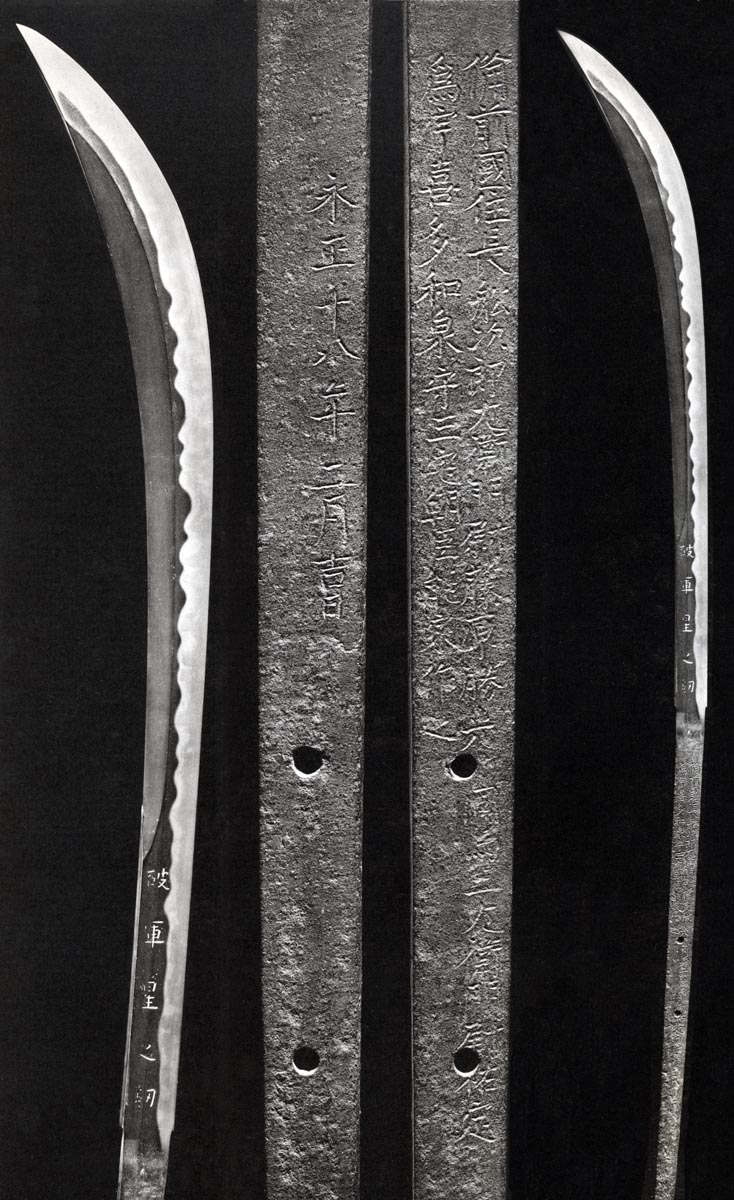
SAKYOnoSHIN MUNEMITSU BUN-MEI (f: SUKEMITSU, br: KATSUMITSU): The 5th MUNEMITSU from NAGAMITSUs' SHO-WA 1312 KO-OSAFUNE School. Like OEI MORIMITSU, he is the star of his time, being teacher and way-path for many. This family literally brought their SUE-BIZEN style to new places, such as neighbors, HARIMA and MIMASAKA and faraway OMI, displacing an old and long held sway. The SENGOKU received the MURAMASA, HEIANJO, SHIMADA group impact along with MUNEMITSU's SUE-BIZEN. MINO postured its product against these successes. SENGOKU Influences MINO KANESADA/KANEMOTO SOSHU TSUNAHIRO with HIROMASA MUNEMITSU/KATSUMITSU and FUSAMUNE and the SUE-BIZEN The BUN-GI Triad SENGO MURAMASA BUNGO TAIRA NAGAMORI HEIANJO NAGAYOSHI SHIMADA YOSHISUKE MUNEMITSU was the second son of ROKUROZAEMON SUKEMITSU and a date of EI-KYO 9, or 1437 is given for his birth. He was the younger brother of UKYOnoSUKE KATSUMITSU and uncle to UKYOnoSUKEs' son, the heralded JIROZAEMON. These were the heavy hitters of the SUE-BIZEN. An accepted OSHIGATA dating from TAI-EI shows his to be one of the longest sword careers, spanning BUN-MEI through KYO-ROKU 1528. An always noted note: there are many collaboration pieces with brother, UKYOnoSUKE. Following his brother's death, MUNEMITSU found nephew, JIROZAEMON KATSUMITSU for partnerships. Pieces with JIROZAEMON inscriptions should be presumed past MEI-O 9, 1500. SAKYOnoSHIN was a teacher of sword making to MIMASAKA JOSHU Lord AKAMATSU MASANORI, the reclaimer of HIMEJI Castle. UKYOnoSUKE KATSUMITSU, SAKYOnoSHIN student, MIMASAKA MUNEMITSU and others followed MASANORI on ASHIKAGA YOSHIHISAs' SEIBATSU to OMI. See MIMASAKA, HARIMA and OMI. MUNEMITSU made strong, wide KOSHIZORI UCHIGATANA with little FUNBARI. There may be BO-HI. He holds a reputation for short, BIZEN-style NAKAGO on DAITO, but long NAKAGO on his strong and thick UCHIZORI TANTO. Standing KO-MOKUME shows JI-NIE and an excellent near-UTSURI of NIE JI-BA, a BIZEN old and special mark. His dynamic and wide-standing GUNOME-CHOJI set the ideal for the SUE-BIZEN. It was here the famous KANInoTSUME "Crab-claw" CHOJI began. BIZEN-no-KUNI JU OSAFUNE SAKYOnoSHIN MUNEMITSU BIZEN-no-KUNI YUKIE-GORI JU OSAFUNE SAKYOnoSHIN MUNEMITSU BIZEN-no-KUNI OSAFUNE SUKEMITSU JINAN SAKYOnoSHIN MUNEMITSU SAKU BIZEN-no-KUNI OSAFUNE KATSUMITSU MUNEMITSU BITCHU OITE KUSAKABE SAKU |
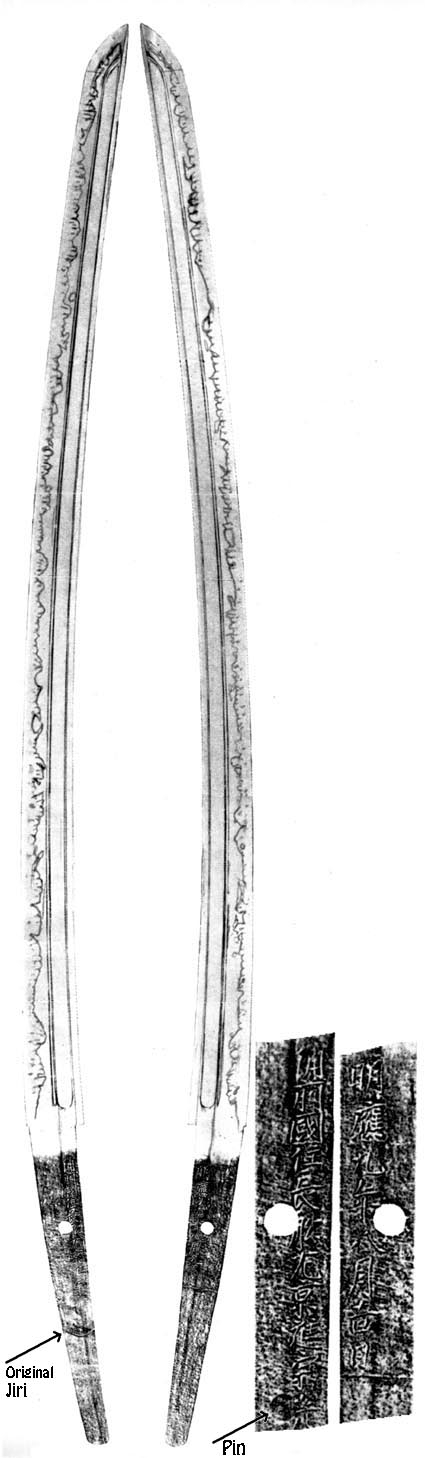
JUYO TOKEN MUNEMITSU NAGASA: 2 SHAKU 2.9 SUN MOTO-HABA: 1 SUN SORI: 7.5 BU SAKI-HABA: 7 BU NAKAGO: 6.7 SUN, RYOTE from 4.4 KATATE A wide, thick SHINOGI-TSUKURI, IHORI-MUNE UCHIGATANA. The strong SUGATA renders a measurable FUNBARI absent as the broad upper straightens through the MONOUCHI to place power at the YOKOTE and FUKURA. A small groove hugs the SHINOGI to map the trench of a large, round BO-HI occupying the whole of the SHINOGI-JI from KO-SHINOGI to a MARU-DOME at the HABAKI-MOTO. Energetic and crowded GUNOME jut mountainous KOSHI-HIRAKI-like undulations high in the JI. YO sculps definition for grouping KO-CHOJI and tops become SAKA while pointed spires slip sideways to form the grasping claws of his famous KANInoTSUME "Crab- claw" CHOJI. TOBI-like figures are teased and tugged by the insistent pull of NIE JI-BA welling over the NIOI HABUCHI. This NAKAGO is unusual because it was increased sometime after the TEN-SHO period from its 4.4 SUN KATATE "one-handed" length to RYOTE, 6.7 SUN for two. KATANA MEI: BIZEN-no-KUNI JU OSAFUNE SAKYOnoSHIN MUNEMITSU URA: MEI-O KU-NEN HACHI GATSU KICHI JITSU |
MIMASAKA MUNEMITSU CHO-KYO: IWATA ROKUROZAEMON. TSUKATANI JU in MIMASAKA. This is a brother student with the famous AKAMATSU MASANORI, Lord of HARIMA, who was the second coming for the AKAMATSU in HARIMA (see MASANORI below). SAKUSHU MUNEMITSU studied with SAKYOnoSHIN and then lived at MIMASAKA. He and other of his BIZEN alma mater went with MASANORI to OMI for ASHIKAGA YOSHIHISAs' SEIBATSU siege of the ROKKAKU. Work from BUN-MEI 1469 to EI-SHO 1504. GUNOME-MIDARE BA with ASHI-IRI in the SAKYOnoSHIN style. HA-AGARI KURI-JIRI NAKAGO with slight curve. Characters are wide set, thin but firmly put. See MIMASAKA SAKUSHU JU MUNEMITSU SAKUSHU TSUKATANI JU ROKUROZAEMONnoJO MUNEMITSU MASANORI CHO-KYO (t: SAKYOnoSHIN MUNEMITSU): AKAMATSU JOSHU "Lord of the HARIMA AKAMATSU," nephew of AKAMATSU MITSUSUKE. KATANA, TANTO and WAKIZASHI in HARIMA and MIMASAKA. His work is in the style of SAKYOnoSHIN: KO-MOKUME with JI-NIE. NIOI KO-MIDARE, KO-GUNOME CHOJI BA with ASHI. GUNOME-TOGARI theme. Pattern may seem to thin out in the lower. MIDARE BOSHI with FUKASHI-KAERI. See HARIMA for the story of the AKAMATSU, MIMASAKA and OMI HYOBU SHOYU MINAMOTO ASON MASANORI SAKU JUSHI-I SAKYO-DAYU MINAMOTO ASON MASANORI SAKU |

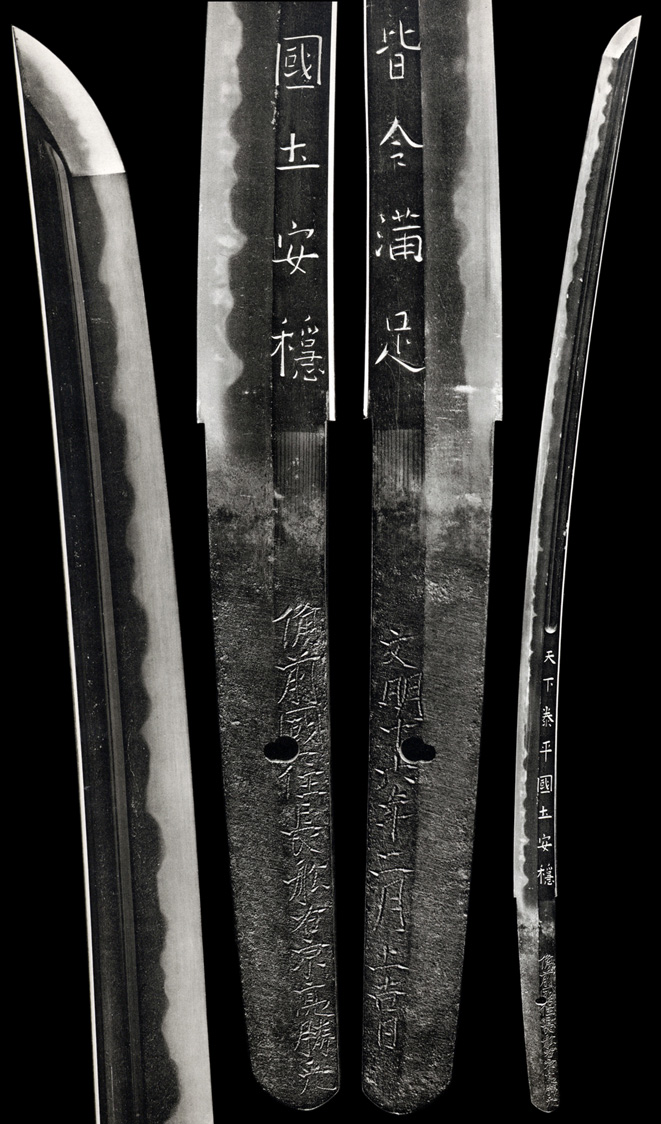
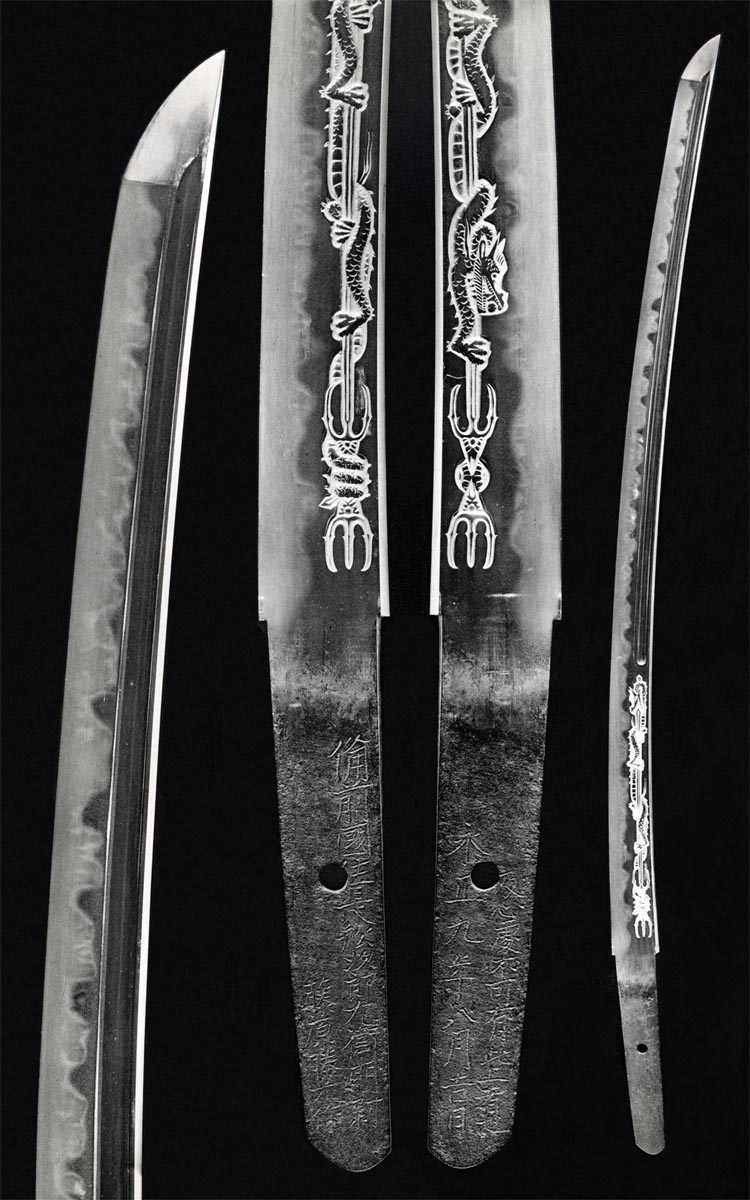
KATSUMITSU BUN-MEI (f: ROKUROZAEMON SUKEMITSU, br: MUNEMITSU): Eldest son. Attended ASHIKAGA YOSHIHISA's OMI SEIBATSU. See OMI, MIMASAKA and HARIMA UKYOnoSUKE and brother, SAKYOnoSHIN MUNEMITSU made many works together and often struck both names to a MEI. UKYOnoSUKE is the father of JIROZAEMON KATSUMITSU, perhaps the most regarded of all the SUE-BIZEN. Swords following MEI-O with the shared MEI will be JIROZAEMON's. See SAKYOnoSHIN MUNEMITSU, above and JIROZAEMON KATSUMITSU. Beautiful swords of 2.1 SHAKU and NIOI YAKIBA patterns are the SUE-BIZEN, BUN-MEI marker. NIOI-DEKI KO-CHOJI from GUNOME in intricate variations has ASHI, YO and TOBI-YAKI. The tops may show KANInoTSUME "Crab-claw" CHOJI that will stand out strongly from its dance with YUBASHIRI. Both KATSUMITSU and his brother may include BITCHU KUSAKABE in the MEI, accounting many travels. KATSUMITSU BISHU OSAFUNE KATSUMITSU BISHU OSAFUNE KATSUMITSU GOSHU GO-JIN SAKU BIZEN-no-KUNI JU OSAFUNE UKYOnoSUKE KATSUMITSU YUKIE-GORI KORE JU OSAFUNE KATSUMITSU SHATEI MUNEMITSU BIZEN-no-KUNI JU OSAFUNE KATSUMITSU MUNEMITSU BITCHU OITE KUSAKABE SAKU KORE BISHU OSAFUNE KATSUMITSU MUNEMITSU OITE HEIANJO SAKU KORE KATSUMITSU EI-SHO (f: UKYOnoSUKE KATSUMITSU): JIROZAEMON. Work from CHO-KYO 1487 to TEN-MON 1532. He is seen in MIMASAKA along side SAKYOnoSHINs' students, AKAMATSU JOSHU MASANORI and MIMASAKA MUNEMITSU, see MIMASAKA. He has been called SUE-BIZEN's greatest smith. The earlier MEI will start with NI, meaning two, for the beginning phonetic of JIRO. Later we see JI or TSUGU. It was common for these smiths to make collaboration pieces and signify them with both names in the MEI. JIROZAEMON KATSUMITSU made blades with his son, JIROBEI HARUMITSU, the famous YOZOZAEMON SUKESADA and, following the death of UKYOnoSUKE, took his father's place with uncle, SAKYOnoSHIN MUNEMITSU. See MUNEMITSU and KATSUMITSU above. KO-MOKUME HADA. TOGARI marks and shapes KO-NIE KOSHI- HIRAKI GUNOME-MIDARE HA resembling OEI YASUMITSU. Also smaller KO-MIDARE patterns of GUNOME KO-CHOJI BA. KO-NIE TOBI-like JI-BA will be seen. Made finely carved KURIKARA "Dragon" HORIMONO. See MIMASAKA OITE MIMASAKA-no-KUNI OHARA-SHO BIZEN JU OSAFUNE KATSUMITSU SAKU BIZEN-no-KUNI JU JIROZAEMONnoJO KATSUMITSU BIZEN-no-KUNI OSAFUNE JIROZAEMONnoJO KATSUMITSU BIZEN-no-KUNI JU OSAFUNE JIROZAEMONnoJO KATSUMITSU BIZEN-no-KUNI JUNIN OSAFUNE JIROZAEMONnoJO KATSUMITSU BIZEN OSAFUNE JIROZAEMONnoJO OITE MIMASAKA OHARA-SHO SAKU BIZEN-no-KUNI JU OSAFUNE JIROZAEMONnoJO FUJIWARA KATSUMITSU SAKU |
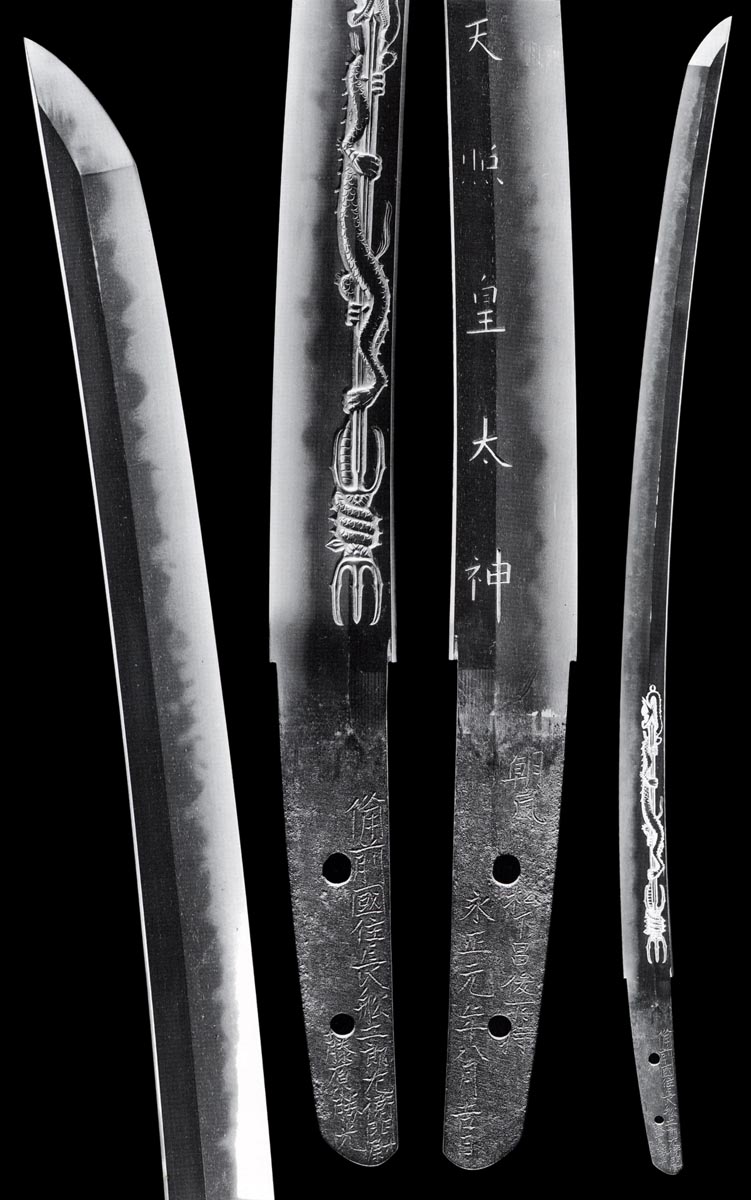
JUYO BIJUTSU-HIN ASA ARASHI "Morning Storm" JIROZAEMON KATSUMITSU
JUYO BIJUTSU-HIN ASA ARASHI "Morning Storm" JIROZAEMON
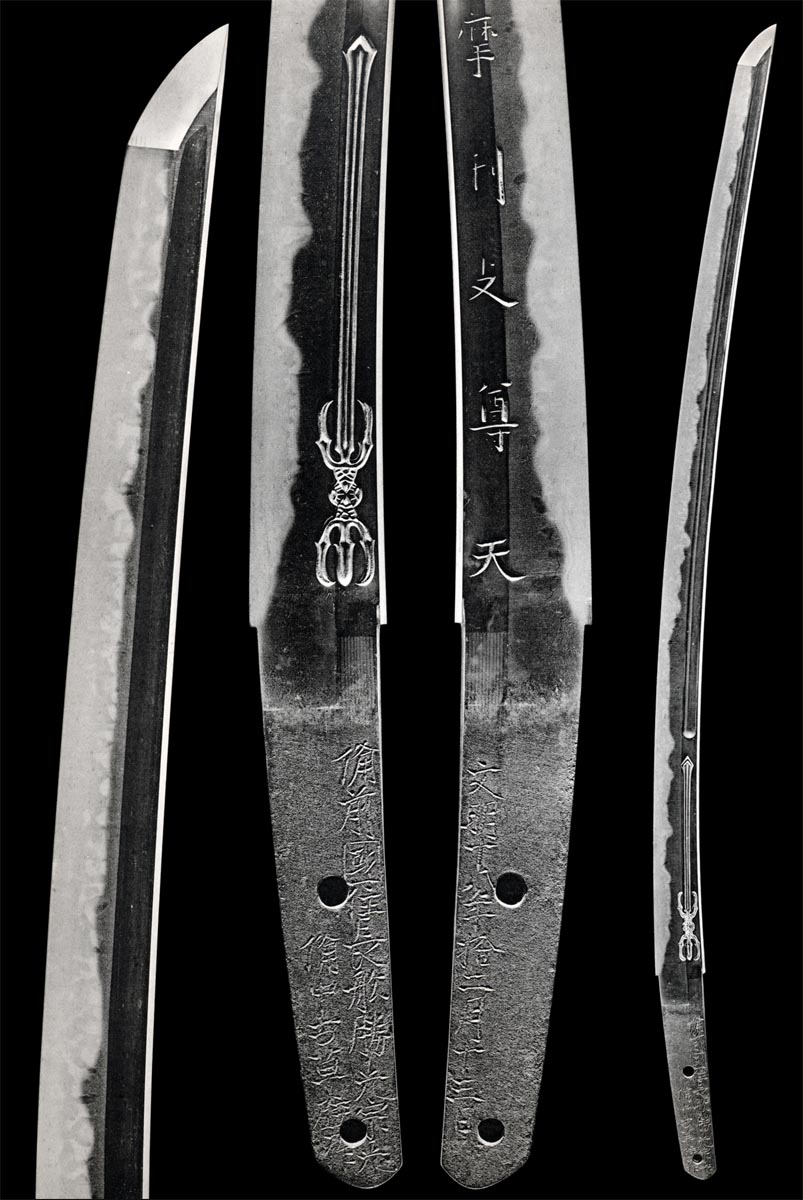
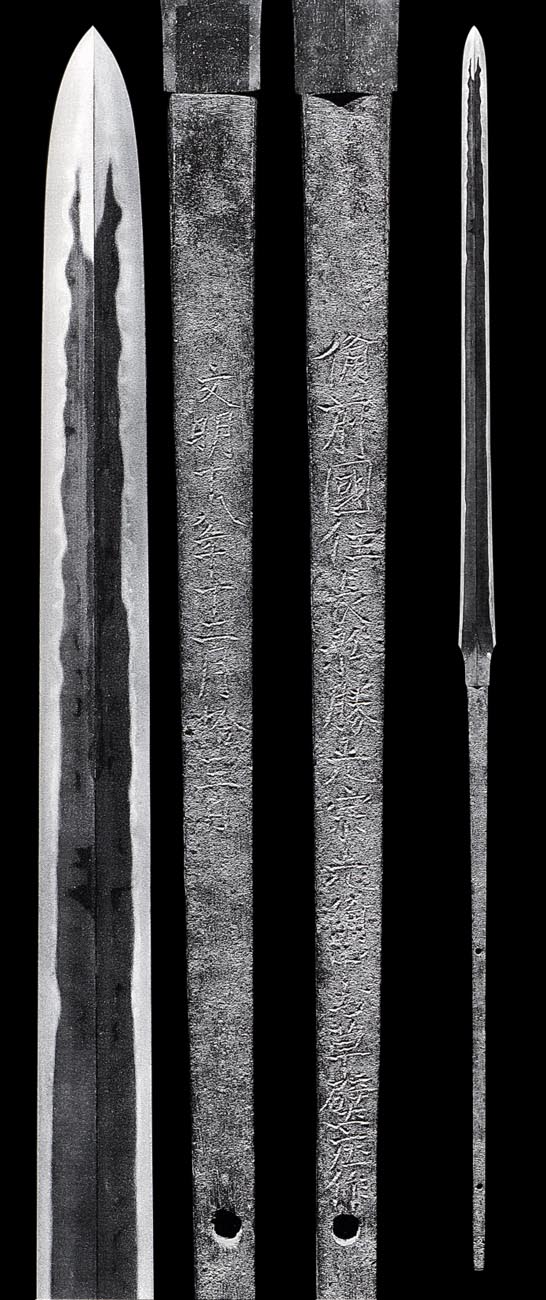
NAGASA: 2 SHAKU 5 BU MOTO-HABA: 1 SUN SORI: 6 BU SAKI-HABA: 7.2 BU NAKAGO: 4.1 SUN SHINOGI-TSUKURI, IHORI-MUNE UCHIGATANA. The evenly broad width and powerful MONOUCHI balance this short stature. Dewy JI-NIE brings a luminous serenity to its KO-ITAME steel. OBUSA Crab-claws grow like mollusks from the crush of his rocky, SUE-BIZEN GUNOME-CHOJI, KO-CHOJI BA; where NIOI-awash SUNAGASHI and KO-NIE blur figures to a hidden wind that flings TOBI debris into the air. Zigzagging triangles fill the KISSAKI, but HAKIKAKE broom-strokes pull the head open before a long fall down the MUNE. Dragon and KEN HORIMONO ride the OMOTE-JI in the lower with AMATERASU KOTAI opposing on the URA. Short, HA-AGARI BIZEN-NAKAGO has two MEKUGI-ANA, safely centered. KATANA MEI: BIZEN-no-KUNI JU OSAFUNE JIROZAEMONnoJO FUJIWARA KATSUMITSU ASA ARASHI "Morning Storm" EI-SHO GAN-NEN HACHI GATSU KICHI JITSU (Eighth month, 1504) |
KATSUMITSU KYO-ROKU (f: JIROZAEMON KATSUMITSU): SHURInoSUKE. Work from BUN-GI 1501 to TEN-MON 1532. MOKUME HADA. NIE KOSHI- HIRAKI GUNOME-CHOJI BA and GUNOME-MIDARE HA. BISHU OSAFUNE SHURInoSUKE KATSUMITSU BIZEN-no-KUNI JU OSAFUNE SHURInoSUKE KATSUMITSU |
- SUE-BIZEN INCOMPLETE FORWARD OF THIS POINT -
HIKOBEInoJO KATSUMITSU TOBEInoJO KATSUMITSU SHURInoSUKE KATSUMITSU(6) KYO-ROKU (f: JIROZAEMON KATSUMITSU, br: JIROBEI HARUMITSU): TOZAEMON KATSUMITSU(7) TAROBEInoJO KATSUMITSU EI-ROKU: GUNOME-CHOJI BA. ROKUROJIRO KATSUMITSU KYO-ROKU: SAKON KATSUMITSU TEN-SHO: JIROBEI HARUMITSU KYO-ROKU (f: JIROZAEMON KATSUMITSU, br: SHURInoSUKE KATSUMITSU): HARUMITSU HARUMITSU HARUMITSU
|