![]() |
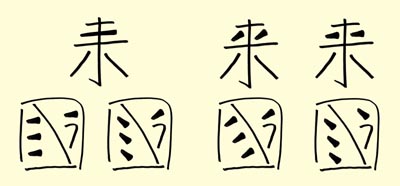
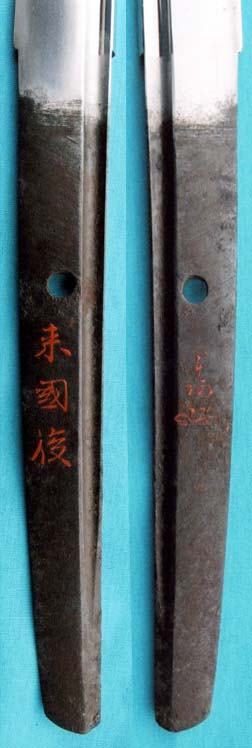
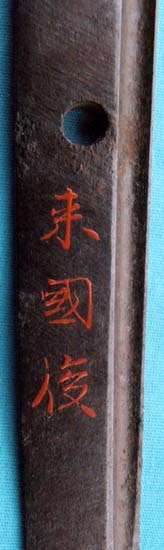
YAMASHIRO RAI MAGOTARO KUNITOSHI SANJI "Three characters" RAI KUNITOSHI NIJI Two-characters KUNITOSHI made the bold style of his middle-late KAMAKURA peers. Strong, with little tapering in width. (Note: FUNBARI is a term, properly used to describe the HEIAN SUGATA trait of overt width at the base. HEIAN FUNBARI was exemplified by the covergence to a very small KO-KISSAKI. FUNBARI has become commonly used to describe any noticeable difference in width between the upper and lower. This is technically incorrect, although common to the tongue. As it is colloquial, one should know the difference and make sure in the speaking) NIJI's work was seated to his peers and style of the mid-KAMAKURA, fully expanded upper. Differential in width had receded steadily until the 2nd generation FUKUOKA ICHIMONJI pushed SUGATA and YAKIBA to their limits around KEN-CHO 1249. This zenth of mid-KAMAKURA expansion stayed through BUN-EI 1264, where we see a refining. Both SUGATA and YAKIBA become more defined and deliberate. KYOTO, the always city, had always produced the highest development and sophistication of arts and literature. KYOTO refinement was withdrawl from overbearance - without weakness. Born of the aristocracy, the essence of the Japanese soul was searched and researched in the capital provinces. RAI swords and schools reflect this. While the FUKUOKA pushed all parameters to an extreme, YAMASHIRO sword makers articulated their always tasteful sophistication and reserve. The SUGATA of NIJI KUNITOSHI shows the display of mid-KAMAKURA roots and domain. MAGOTARO, conversely, creates the SUGATA of the "coming" time. There has been confusion in reference because there appears to be no over-lap. It would seem possible for a new leader to appear suddenly in the midst of an othrwise strong career, but in such cases it would be expected to see the early works of the new master before the passing of the senior. Sometimes a protege would help the master until old age before making swords under his own name, NAGAMOTO helping his master, OSAFUNE NAGAMITSU is the example. The strength of MAGOTARO is seen by his recall from the long past HEIAN, a new FUNBARI and with it, a new direction for the whole of the country. The KEN-CHO 1249 mid-KAMAKURA expansion of width was most similar with the even width of the NAMBOKUCHO. MAGOTARO's post mid-KAMAKURA FUNBARI played off the theme of HEIAN SUGATA just as NAMBOKUCHO mimicked the expansion of mid-KAMAKURA. MAGOTARO KUNITOSHI created and led the retreat from the full SUGATA of his father's mid-KAMAKURA roots. His style departure was not created to counter his father. His was the strong stroke of the great master. He did not just change direction, but created the direction. His narrower SUGATA has no weakness, the upper has complete power.MAGOTARO = "Coming" of new style. |
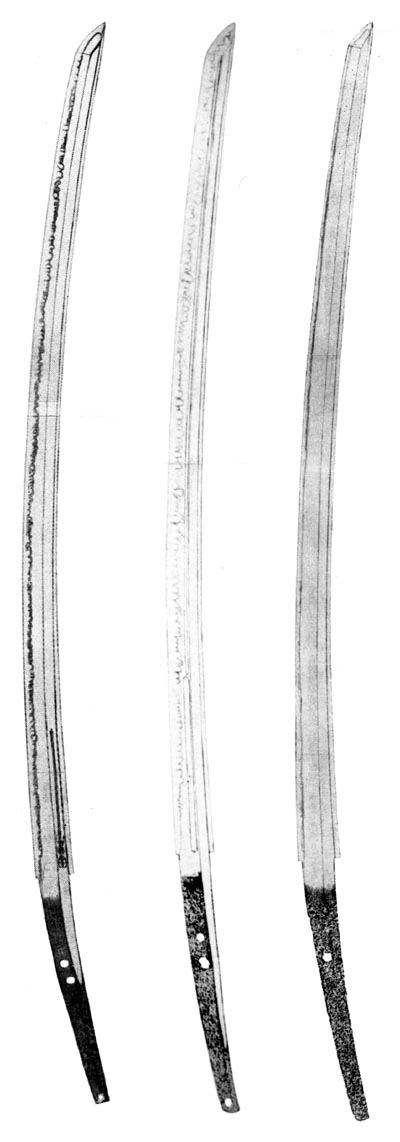
| Rai Kuniyuki
Mid-Kamakura Width in the Upper SHO-GEN 1259 |
Niji Kunitoshi
Mid-Kamakura Width in the Upper KO-AN 1278 |
SanjiKunitoshi
Progenitor of Transition Upper narrows, Ko-kissaki SHO-O 1288 |
Remember
![]() |
|||
|
MAGOTARO RAI KUNITOSHI - SANJI "Three characters"
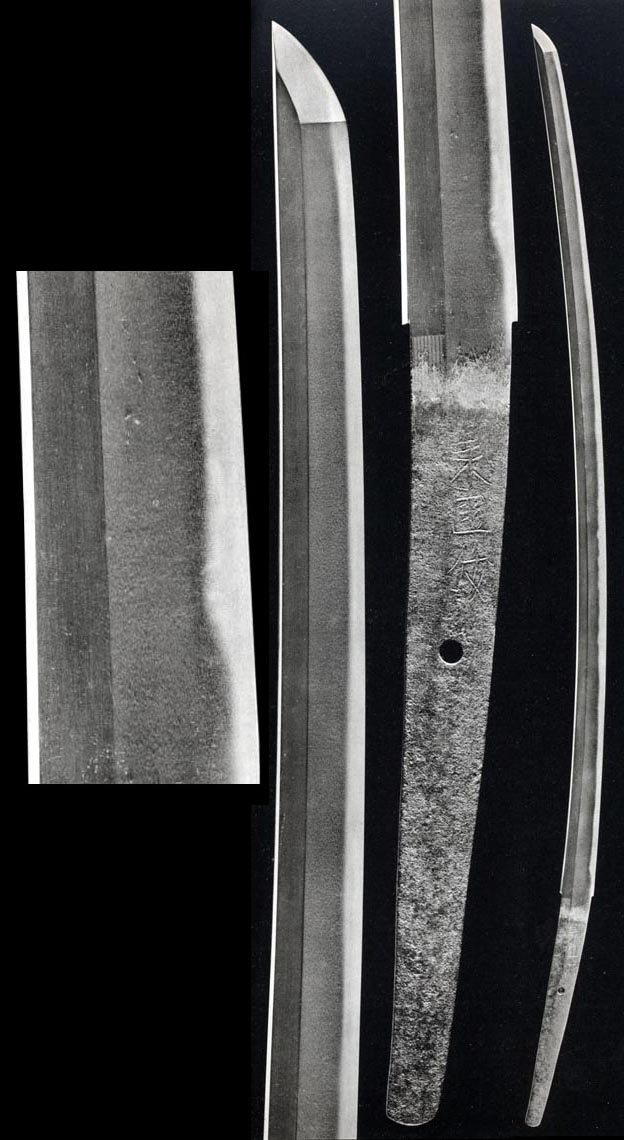
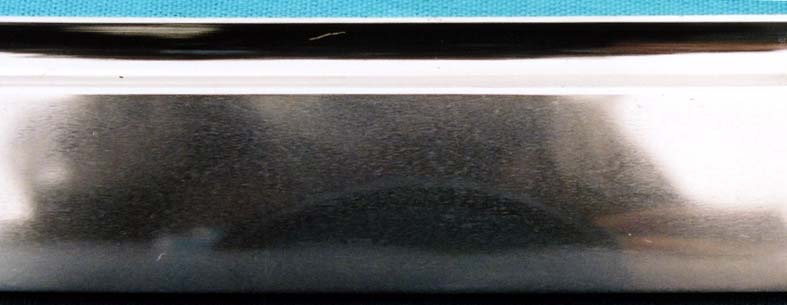
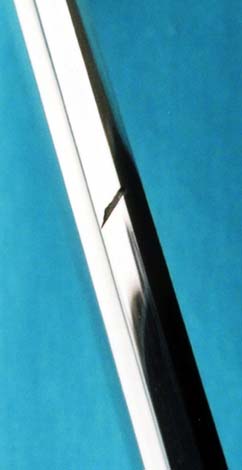
RAI KUNITOSHI SHO-O: The SUGATA and HAMON changes definitively to mark this work. Considered one of the truly great TANTO makers. TACHI is Middle/late-KAMAKURA SUGATA, where the earlier strength of the MONOUCHI withdraws for the graceful lines popular of the SOSHU KAMAKURA movement. Here a smaller, slightly elongated KISSAKI is looked for; along with a gentle tapering through the MONOUCHI. The HAMON will be a reserved CHU-SUGU KO-MIDARE or KO-GUNOME of fairly even height. Structured BOSHI with KO-MARU to deep and long turnback. TANTO: May be the wide of YOSHIMITSU or the narrow and thick KAMAKURA TANTO SUGATA - a creation of the AWATAGUCHI lines. There are those who say the great TANTO talk to the hand, - that the blind can judge by feel alone. He made both types: The narrow, older style, and wide. Often UCHIZORI and MITSU-MUNE. Often KOSHI-HI or KEN. ITAME has fine JI-NIE. HOSO-SUGU or SUGU ASAKI-NOTARE. Small KO-ASHI might battle KINSUJI in a gentle tussle. Subtle SUNAGASHI appears, then hides. AWATAGUCHI line TANTO makers may have a variance of the YAKIBA before the FUKURA at the MONOUCHI. It may be a complexity or a thinning of line. The YAKIBA will usually address the MACHI with variance or figure. KUNITOSHI YAKIBA: Look for a widening or bump of the YAKIBA at the FUKURA. BOSHI then turns in KO-MARU to a deep fall. MEI: RAI KUNITOSHI ______________________________________ KUNITOSHI Reminder: Variation of theme is regarded as late work. Early - Strong KAMAKURA SUGATA - NIE-FUKASHI O-CHOJI MIDARE - DAIBO CHOJI - NOTARE/GUNOME BOSHI with slight KAERI - Two-character MEI Later - SUE-KAMAKURA tapered MONOUCHI to longish KISSAKI - Conservative HAMON - KO-MARU with deep turnback - Three-character MEI |
KOKUHO RAI KUNITOSHI National Treasure
NAGASA: 8.1 SUN MOTO-HABA: 7.4 BU SORI: UCHIZORI MOTO-KASANE: 2.3 BU NAKAGO: 3.1 SUN HIRA-TSUKURI, MITSU-MUNE, UCHIZORI TANTO. The very straight looking MUNE curves smoothly to the point. Thickness brings power to the blade. There are KOSHI-HI, a parallel pair falls along the OMOTE with a single ally on the URA. KO-ITAME with his delicate JI-NIE veil. KO-NIE and tightly developed NIOI draws HOSO-SUGUHA to its edge. KINSUJI and NIOI are set adrift at the MONOUCHI. A gentle ripple of YAKIDASHI greets the MACHI on both sides. There is widening at the FUKURA where the line leaves on a path toward the SAKI. KO-MARU mates a deep-KAERI. A longish FURISODE UBU NAKAGO has two MEKUGI-ANA and his three character MEI:
RAI KUNITOSHI
KOKUHO RAI KUNITOSHI KODACHI
KOKUHO RAI KUNITOSHI KO-DACHI NAGASA: 54.2cm - 1 SHAKU 7 SUN 9 BU SORI: 1.5cm NAKAGO: 16.6cm SHINOGI-TSURKI, IHORI-MUNE, narrow MIHABA to KO-KISSAKI. An exemplary version showing SANJI's SUGATA gift to the later KAMAKURA. The tightest KO-ITAME HADA runs under JI-NIE. HOSO-SUGU KO-MIDARE, KO-CHOJI BA mixed. Tight NIOI-GUCHI of KO-NIE has ASHI and YO. Small KINSUJI pierce the line. BOSHI OMOTE has small NOTARE-KOMI with KO-MARU at the head. BOSHI URA is SUGU KO-MARU with slight HAKIKAKE. Long, slender UBU NAKAGO is perfect example in miniature. One MEKUGI-ANA and signed in the SHINOGI-JI: RAI KUNITOSHI |
KOKUHO RAI KUNITOSHI
KOKUHO RAI KUNITOSHI NAGASA: 72.2cm SOORI: 2.4cm SHINOGI-TSUKURI, IHORI-MUNE, deep KOSHI-ZORI TACHI. SANJI's SUGATA revolution is seen in the narrowing reach. SANJI's beautiful and compacted KO-ITAME descends like shaved marble. There is JI-NIE and RAI NIE-UTSURI. Basic NIOI-GUCHI shows KO-NIE HOSO-width KO-CHOJI-MIDARE BA finding CHOJI rises building KOSHIBA to the mid. SUGU KO-MARU BOSHI. Fairly straight-falling UBU NAKAGO is signed in the JI above its single MEKUGI-ANA: RAI KUNITOSHI |
|