| ©
Copyright Robert Cole 2015
- No copying or distributing - BIZEN SODEN BIZEN"The Ten Students" CHOGI or/ NAGAYOSHI |


|
|
The school of CHOGI made MOKUME or KO-MOKUME with O-HADA. JI-NIE
and CHIKEI. MIMIGATA-shaped O-GUNOME MIDARE with valleys, squared
________       KAKU and CHOJI-like MIDARE mix in NIOI. SUNAGASHI.
SANENAGA                          "Balanced valleys." Long KAERI.
MITSUNAGA
  |_______________________ __________________
__|__     -brothers-    __|______         ___|_____
CHOGI(1) KO-EI 1342     NAGASHIGE(1)      KANESHIGE KEM-MU 1334
NAGAYOSHI    _____________| TEI-WA 1345   ___|____
  |      ___|_____      __|______         KANENAGA(1) TEI-JI 1362
  |      NAGAYOSHI(1)   NAGASHIGE(2)
  |      TEI-JI 1362    EN-BUN 1356
  |_______________________ ________________________ ____________
__|__                  ___|_____                ___|_____       |
CHOGI(2) EI-WA 1375    YOSHIKAGE(2) O-AN 1368   TSUNEHIRO       |
NAGAYOSHI(2)           KANEMITSU School man     BUN-WA 1352     |
CHOSEI or NAGAKIYO     Son-in-law CHOGI                         |
     _____________ ___________ __________________________ ______|
____|_____     ___|____   ____|____                   ___|____
SHIGETSUNA(1)  NAGAMORI   NAGATSUNA(1) KO-RYAKU 1379  KANENAGA(2)
    - TEI-JI 1362 -       ____|____                   O-EI 1394
                          NAGATSUNA(2) O-EI 1394


"The Ten Students"
CHOGI KO-EI (f: MITSUNAGA, grf: SANENAGA): His father will be in
        the style of SANENAGA. Originally NAGAYOSHI, his skill
        and resulting fame earned him the reverential, Chinese
        pronunciation of CHOGI. Born: SHO-O 1288, and died in
        KEN-TOKU 1370. TOZAEMON. One theory has this one long
        career, with a marked decline centered about KO-RYAKU
        1379. Most writing places SHO-HEI 1346 to EN-BUN 1356
        periods for expected pieces. DAITO are rare, TANTO
        plentiful. NAMBOKUCHO wide TACHI with O-KISSAKI and
        NAGAMAKI. TANTO are wide and comparatively small.
-Early: NIOI HAMON. MOKUME HADA under standing UTSURI.
-Later: NIE-DEKI with JI-NIE and CHIKEI tracing grain.
        GUNOME-MIDARE swings on wide undulations of the YAKIBA.
        TEI-JI 1362 period finds NOTARE HAKO-BA resembling SENGO
        MURAMASA School (Note: Unlike CHOGI, SENGO will show
        MASAME HADA). TOGARI pulls on O-CHOJI MIDARE BA and
        SAKA-ASHI may be seen in KO-GUNOME MIDARE HA. Skill level
        declines in swords of KO-RYAKU 1379 and are supposed the
        work of CHOGI(2). The CHOGI MEI is wide and appears
        stretched sideways, as if a roller had squeezed or
        smeared normal characters across the tang to the right.
        BOSHI: MIDARE. KO-MARU at the head. See BUNKAZAI CHOGI
        following
    MEI: BISHU OSAFUNE CHOGI
         BISHU OSAFUNE JU CHOGI
         BIZEN OSAFUNE JU CHOGI
         BIZEN-no-KUNI OSAFUNE JU CHOGI
 Tokubetsu Juyo Chogi
|
|
Chogi
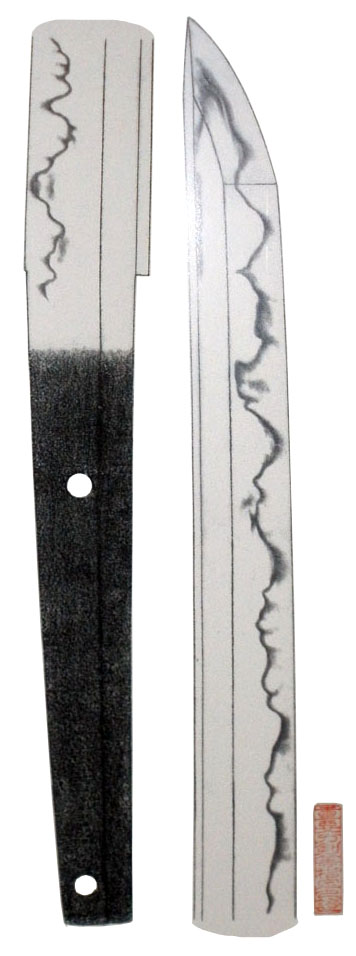
Dambira - Kokuho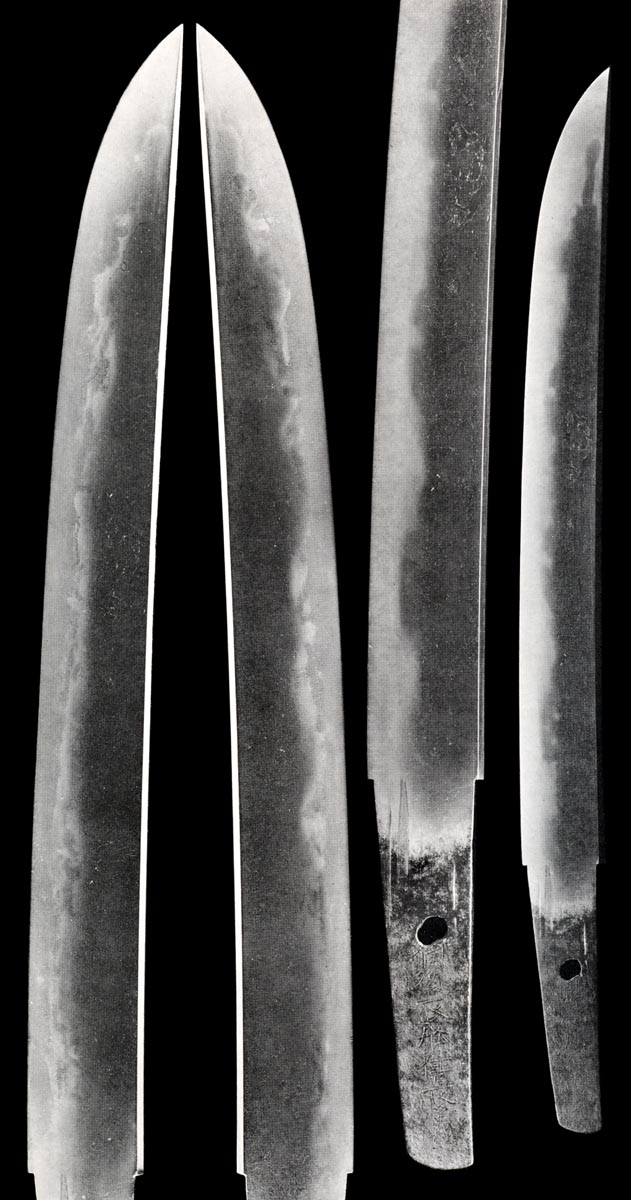 Chogi Dambira - Kokuho Nagasa: 27.7cm Moto-haba: 2.6cm Hira-Tsukuri, Mitsu-Mune. Itame Hada has Ji-Nie and Chikei. Soshu Den style O-Midare Ba with Nijuba, Tobi-Yaki and Sunagashi in clear Nioi-Fukashi and Nie. Tsuki-age Boshi. Ubu Haagari Kurijiri has one, multi-mounted Mekugi-ana. Bishu Osafune Ju Chogi (Nagayoshi) Shohei Ju Gonen Go Gatsu Hi |
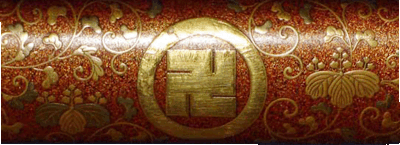
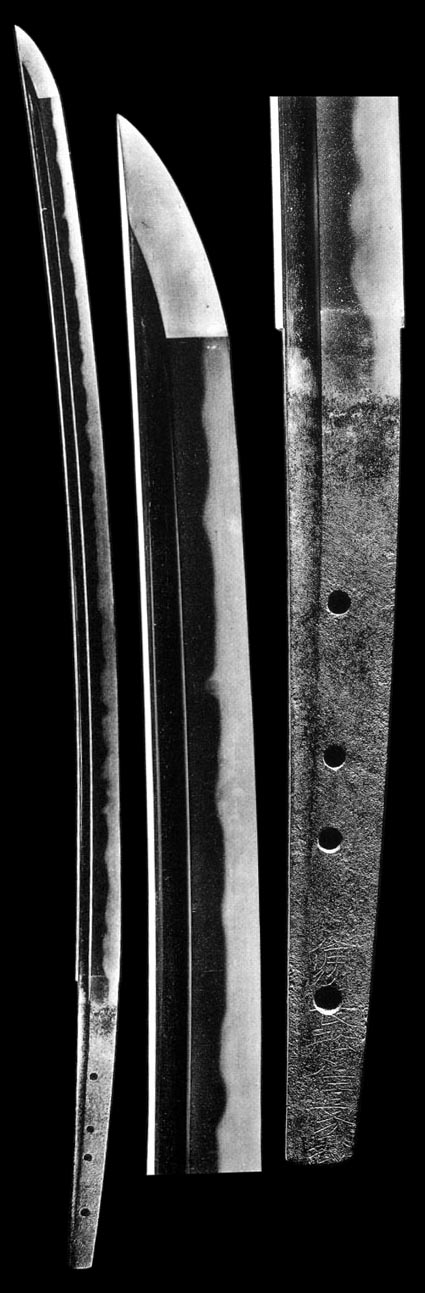
| Chogi Haito Sword of Emperor Meiji 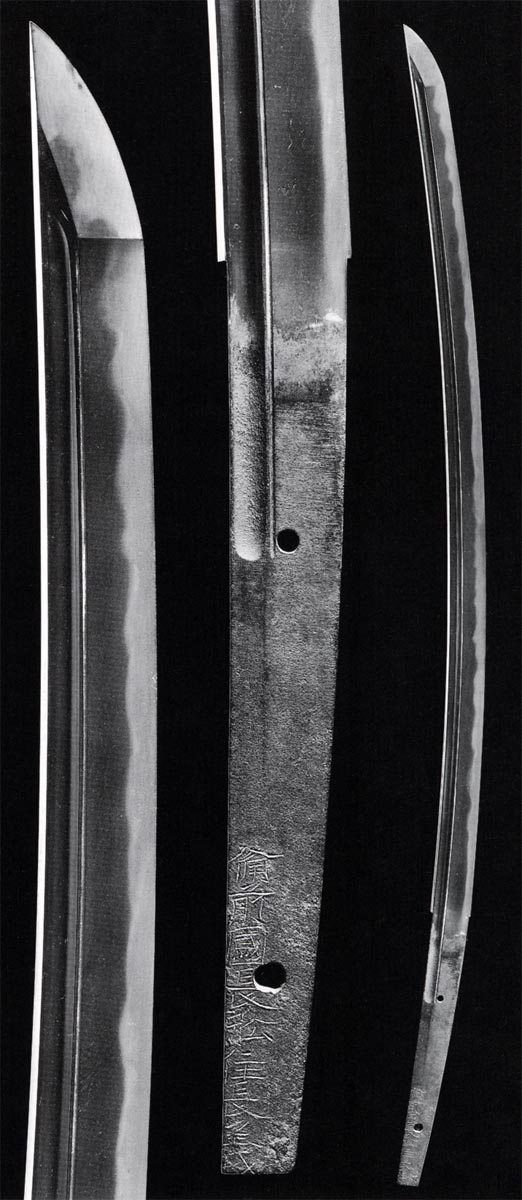 Chogi Nagasa: 71cm Sori: 2.3cm Standing Itame Hada with JiNie, Chikei and standing Utsuri. Bo-Hi and Sobi run the length. Gunome-Midare ba moves inside a Notare line. There is Ashi and Yo and Kinsuji through the Mid. Yakiba widens in the Monouchi. Boshi is deeply set O-Gunome Midare mound turns to an abrupt Kaeri. Suriage Nakago has two Mekugi-ana and Bo-Hi resolves in Marudome. Signed in the Ji at the bottom: Bizen-no-Kuni Osafune Ju Nagayoshi (Chogi) |
Kanenaga
Tachi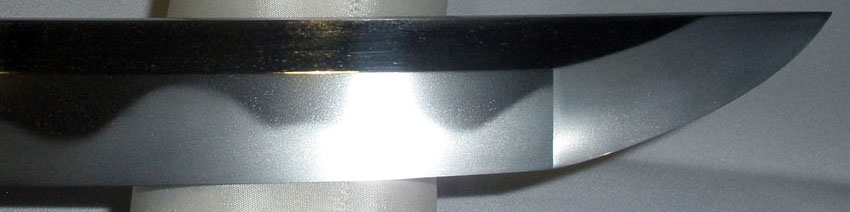 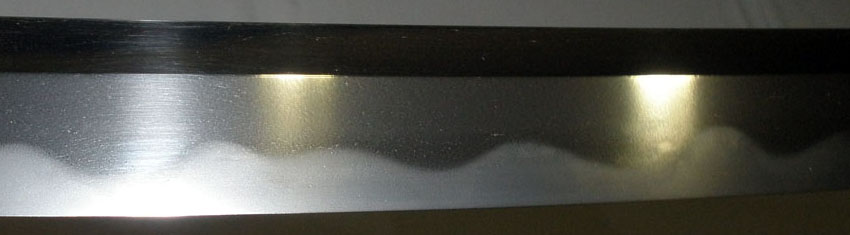 |
CHOGI(2) EI-WA: First signed NAGAKIYO or CHOSEI. Moved to HOKI. MEI: BISHU OSAFUNE CHOGI BISHU OSAFUNE CHOGI SAKU HAKUSHU JU CHOGI HOKI-no-KUNI JU CHOGI TSUNEHIRO(1) GEN-TOKU (t: CHOGI): Work from GEN-TOKU 1329 to BUN-WA 1352. O-MIDARE BA. 2nd: KOZORI. MEI: BISHU OSAFUNE TSUNEHIRO BIZEN OSAFUNE TSUNEHIRO SHIGETSUNA(1) TEI-JI (f: CHOGI): Son and student. To EI-WA 1375. MOKUME. KO-GUNOME KO-MIDARE BA. The O-EI engulfs BIZEN and the 2nd SHIGETSUNA is its convert. See O-EI BIZEN MEI: BISHU OSAFUNE SHIGETSUNA NAGATSUNA(1) KO-RYAKU (t: CHOGI): Possibly son. From TEI-JI 1362. MOKUME. NIE JI-BA in O-GUNOME with TOGARI in a NOTARE- MIDARE line. MEI: BISHU OSAFUNE NAGATSUNA NAGATSUNA(2) O-EI: MOKUME HADA with standing O-EI style BO-UTSURI. KOSHI-HIRAKI GUNOME-CHOJI BA. MEI: BISHU OSAFUNE NAGATSUNA KANESHIGE KEM-MU (t: CHOGI): Indirect student. Some say he was the brother of CHOGI. Work to TEI-JI 1362. SOSHU style. CHOJI HASU-MIDARE with SAKA-ASHI. MEI: BISHU OSAFUNE KANESHIGE BIZEN-no-KUNI JU KANESHIGE BIZEN-no-KUNI OSAFUNE JU KANESHIGE KANENAGA(1) TEI-JI (f: KANESHIGE): To KA-KEI 1387. Also thought possibly the son of NAGASHIGE. There are two theories: First - KANENAGA was one man working until the O-EI. Second - There were two generations, the 2nd, a CHOGI BIZEN CHOGI - NAGAYOSHI School |
Nagasa: 71.6cm Sori: 2cm Moto-haba: 3.1cm Saki-haba: 2.3cm Kissaki-naga 4.6cm Nakago: 18.9cm Shinogi-tsukuri, Ihori-mune, wide Namboku Sugata with Chu-Kissaki. Standing Itame Hada runs. There is thick JiNie and small Chikei throughout. Oei-style Koshi-hiraki Gunome-Choji Midare Ba with Togari in a widely undulating Notare line. There is Yo and Ashi exemplifying and thick Nie. Yubashiri and Tobi-yaki. Midare-Komi Boshi to Ko-Maru turn. O-Suriage Nakago has two Mekugi-ana. |
Kaneshige
San-Shaku Tachi - Kokuho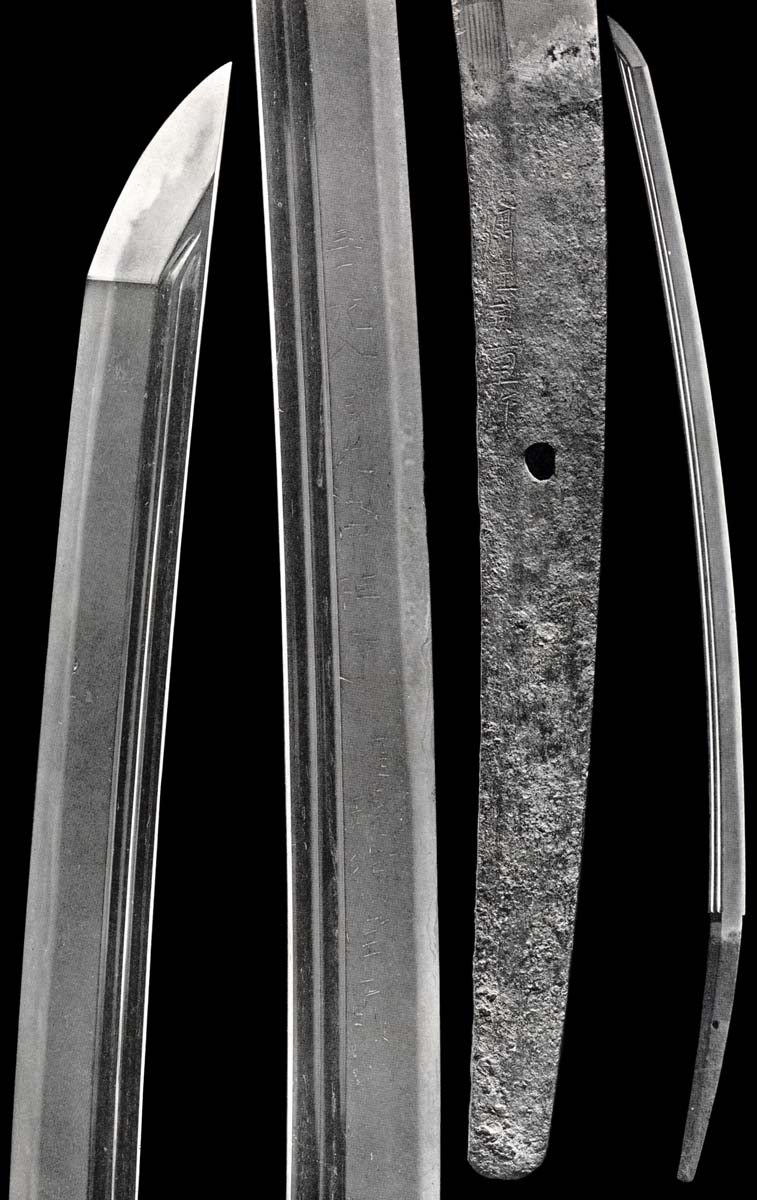 Kaneshige - San-Shaku Tachi Kokuho Nagasa: 93.8cm Moto-Haba: 3.8cm Shinogi-Tsukuri, Maru-Mune, shallow Niku Koshizori Namboku Sugata O-Kissaki Tachi. Futatsu-Bi to Maru-Dome. Engraved in Omote-JI: Hoshi Ju Nikko Yamanaka Zendera Gongen Go Hozen Ura-JI: Oei Niju Mi Ku-Gatsu Hi Fujiwara Seiki Ko-Itame Hada has thin Ji-Nie and standing Midare-Utsuri. Nioi-Deki and tight Nioi Chu-Sugu Ko-Midare of Ko-Choji-Midare Ba. Sunagashi runs Niju in the upper and Kinsuji arcs in the mid. Midare-Komi Boshi to Tsuki-age. Ubu Kurijiri has one Mekugi-ana. Bishu Ju Kaneshige Saku |
|