|
|
|
|
YAMASHIRO AYAnoKOJI School AYANOKOJI are similar to SANJO. SANJO and GOJO smith lines were generally the feeder-source. KO-MOKUME HADA. KO-CHOJI KO-MIDARE. Double-petal CHOJI. The school is renowned for refined beauty. ___________ SADATOSHI AYANOKOJI Founder JO-EI 1232 ARIKUNI HO-JI 1247 |_______________________ ________________________ __________ ____|____ ___|____ ____|____ | SADATOSHI SHO-O 1288 SADANORI SHO-AN 1299 SADAYOSHI | |___________ ___|____ KO-AN 1278 | ____|___ ___|___ KUNINOBU KEM-MU 1334 | SADAYASU IYEYASU | KO-O 1389 TEI-WA 1345 | _____________ _________________________ ___________________| ____|___ ___|___ ___|____ IYETOSHI SADAIYE EI-NIN 1293 SADANARI(1) KO-AN 1278 EI-NIN 1293 ___|_____ ___|____ SADATSUGU GEN-TOKU 1329 SADANARI(2) KA-REKI 1326 ____________________ ________ AWATAGUCHI TADAYOSHI BUN-O 1260 SUKESADA BUN-EI 1264 |_______________________ ___|____ _____________|___ ________________|____ SUYEYUKI KA-GEN 1303 AYANOKOJI TADAIYE ABURANOKOJI TADAYOSHI RYAKU-O 1338 KEM-MU 1334 SADATOSHI JO-EI: AYANOKOJI Founder at YOJO AYANOKOJI. YATARO. Buddhist name: RYOAMI. A GOJO line smith, his time was the transition between early KAMAKURA and mid. Work period estimated as starting around SHO-KYU 1219 and continuing through the `40s, although his dates are often listed as later. One source claims him a son of RAI KUNIYOSHI, which goes with an attendant theory that GOJO to AYANOKOJI SADATOSHI and contemporary RAI KUNIYUKI (AWATAGUCHI KUNIYOSHI son) traded secrets or were peers as both show CHOJI patterns with distinct similarities. SADATOSHI has inter-linked TOBI-like JI-BA and a plainly starker definition, where KUNIYUKI (as all RAI School) endeavored width of YAKIBA through the BOSHI. The BOSHI of KUNIYUKI and his father, KUNIYOSHI is generally smooth. The consistency of SADATOSHI's CHOJI line may seem broken from happenstantial effects at the quench. An otherwise absent high-reaching CHOJI leaves dotting SHIMA-BA to |
 |
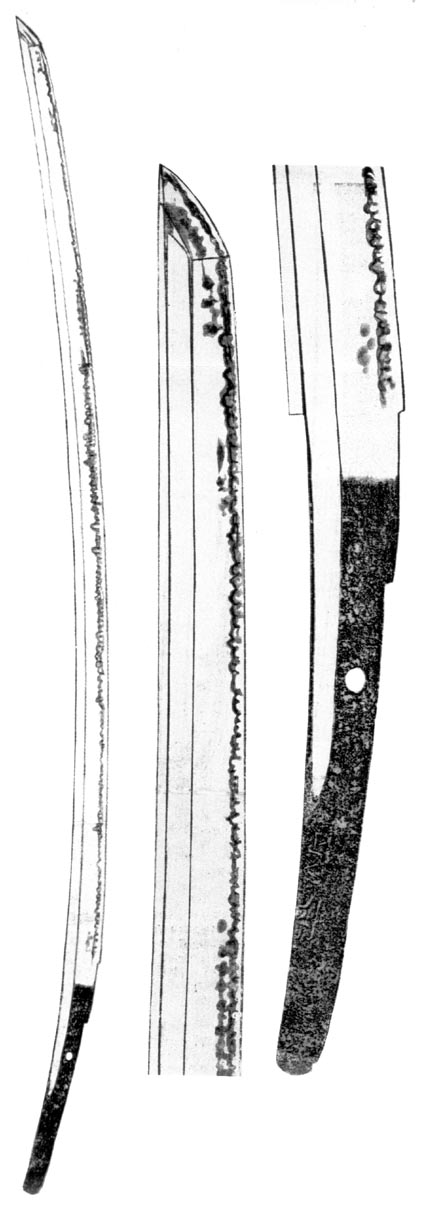
Emperor MEIJI's favorite.
Style is old and classic, a normal width coupled
to great length confuses the perception. BO-HI
runs the whole length. The widening mid sees NIOI
NIJU doubling within DAI-BO CHOJI columns and
occasionally jutting GUNOME that push through the
crush of a crowded KO-CHOJI line. RAI style JI-BA
demand admittance. The BOSHI is debris piled against the FUKURA with defused TOBI suspended above. A relaxed cloud drifts over the KO-SHINOGI. The KAERI seems lost. Curved KIJI-MOMO UBU NAKAGO
with one MEKUGI-ANA sweeps to a rounded JIRI. His
two character MEI is low, near the NAKAGO-MUNE: |
BUNKAZAI SADATOSHI
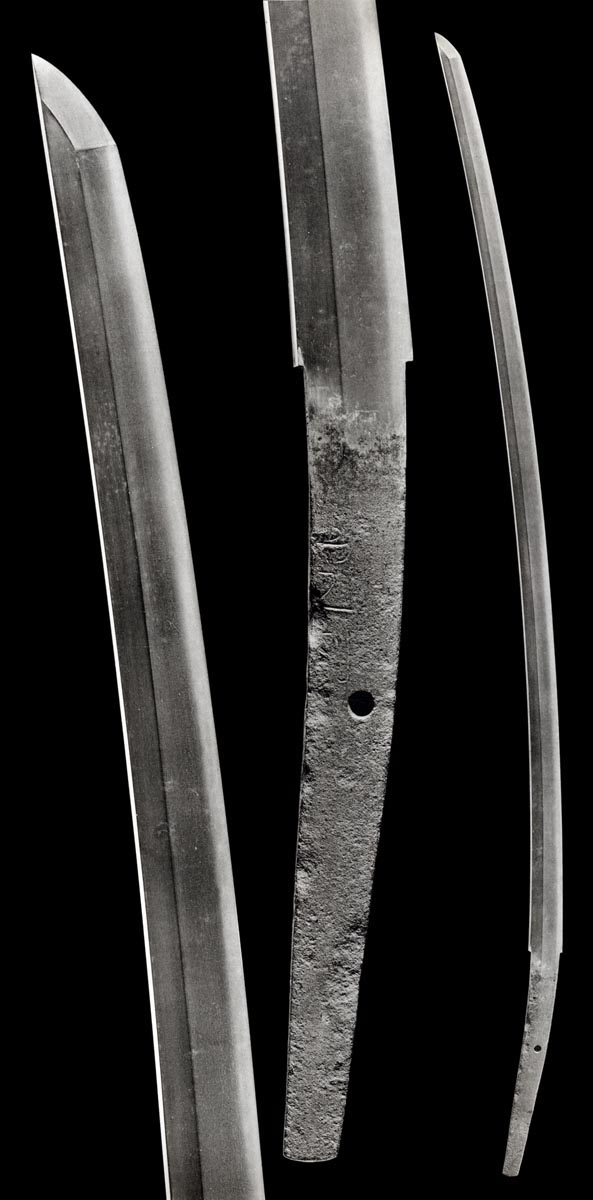 NAGASA: 78.3cm SORI: 2.7cm SHINOGI-TSUKURI,IHORI-MUNE, deeply curved TACHI. MIHABA is a slow tapering to its KO-KISSAKI. An even veil of JI-NIE covers KO-ITAME. NIE and NIOI FUKASHI KO-MIDARE BA exchange position with KO-CHOJI-MIDARE on even intervals. NOTARE BOSHI, KO-MARU to slight KAERI. UBU NAKAGO has one MEKUGI-ANA and his stylized, two- character MEI to the MUNE: SADATOSHI |
YAMASHIRO AYANOKOJI School
ARIKUNI HO-JI: From OSAFUNE.
     JOSHU AYAKOJI JU ARIKUNI

SADATOSHI SHO-O (t: SADATOSHI): He changed his HOU, "Trailing
        footsteps" TOSHI to that of his teacher (LI - benefit
        from labor) in KEM-MU 1334.

SADAYOSHI KO-AN (f: SADATOSHI): Often listed in KA-REKI 1326. He
        made SHINOGI-TSUKURI, IHORI-MUNE TACHI with IKUBI
        KO-KISSAKI, FUNBARI SUGATA. KO-ITAME under JI-NIE.
        NIE KO-MIDARE BA to KO-CHOJI, noted for serenity. KINSUJI
        is found in a MIDARE BOSHI that is HAKIKAKE. The SADA is
        cut large in a somewhat grass-style snaking line. The
        YOSHI is small, its SHI radical, two distinct pieces -
        stacked on a brick.

SADANARI(1) KO-AN (f: SADATOSHI): NISHIKIKOJI JU. Son and student
        ITAME HADA. KO-MIDARE BA and KO-CHOJI KO-MIDARE BA.

SADANARI(2) KA-REKI (f: SADANARI 1): From SHO-WA to SHO-CHU 1324.
        KO-MIDARE BA or KO-CHOJI KO-MIDARE.

SADANORI SHO-AN (t: SADATOSHI): YOJO AYANOKOJI JU. From SHO-AN to
        SHO-CHU 1324. KO-MIDARE or KO-CHOJI KO-MIDARE.

SUYEYUKI KA-GEN (f:SUKESADA): ITAME HADA. SUGUHA with ASHI and
        KO-CHOJI BA.


SADATSUGU GEN-TOKU (t: SADAIYE): From GEN-TOKU to TEI-WA 1345.
        ITAME HADA. GUNOME with ASHI.

TADAYOSHI BUN-O: This could represent a confusion of events. His
        dates start in KEN-CHO 1249, but other sources say he was
        ABURANOKOJI TADAYOSHI of KEM-MU and father of TADAIYE.
        AWATAGUCHI YOSHIMASAs' son, TADAYOSHI was student of
        AWATAGUCHI HISAKUNI. AWATAGUCHI style fine KO-MOKUME.
        KO-MIDARE of KO-CHOJI BA.
     TADAYOSHI

TADAIYE RYAKU-O (F: TADAYOSHI): TOGORO. AWATAGUCHI. Work appears
        in EN-BUN 1356. Off to BINGO with AWATAGUCHI style.
        KO-MOKUME. NOTARE-MIDARE.
     ABURAKOJI TADAIYE
     ABURAKOJI TADAIYE TSUKURU
                  _________            ________ _______
                  SUKEMITSU            SADAYASU ARIYUKI
                  KA-GEN 1303          - EN-KEI 1308 -

                       ________
                       SUKESADA EN-BUN 1356
                       To RYOKAI School
|
Aya-no-Koji
Sadayoshi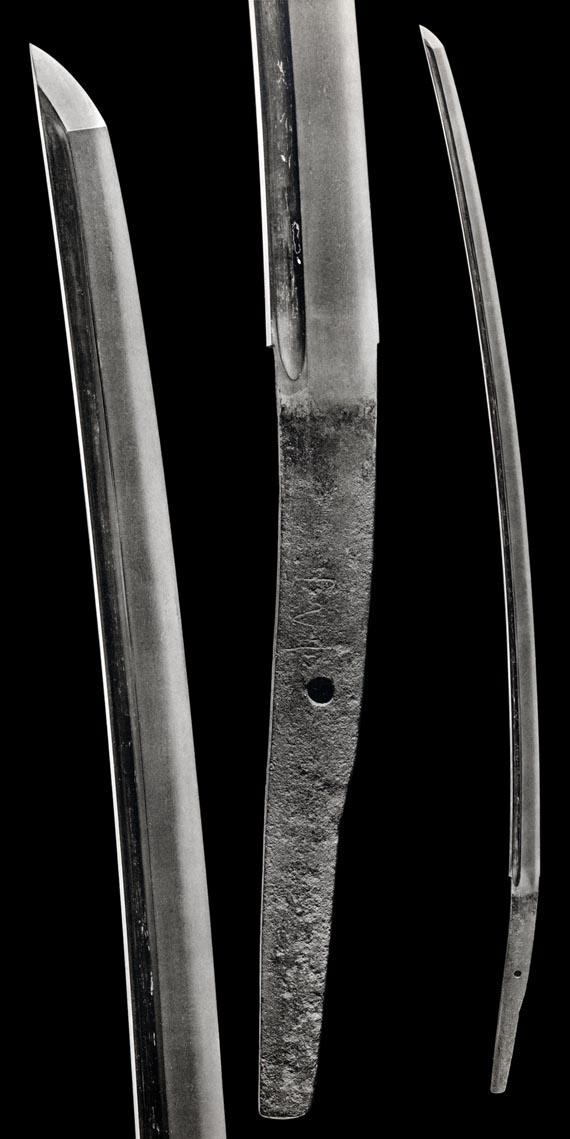 |
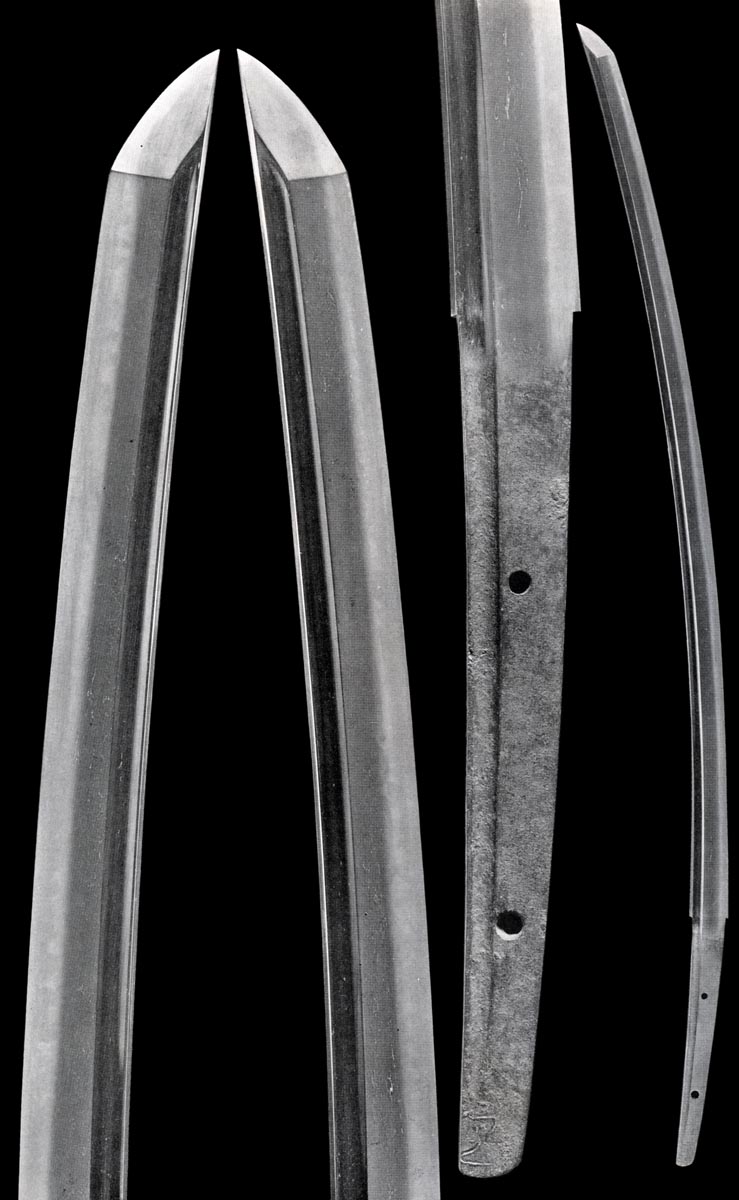 Sadatoshi Tachi - Kokuho Nagasa:73cm Moto-Haba: 2.9cm Shogen - Bunei - 1259 - 1264 time, mid-Kamakura Sugata is compared with contemporary, Kuniyuki. Shinogi-Tsukuri, Ihori-Mune, Chu-Kissaki. Ko-Itame Hada. Nioi-Guchi is tight with Iro Ko-Nie of Gunome Choji-Midare, Ko-Choji with Ashi. Isolated Daibo heads rise through streaming Sunagashi and Kinsuji. Midare-Komi Boshi to Yakizume. Suriage Kurijiri Nakago has two Mekugi-ana. Sada (toshi) |
|